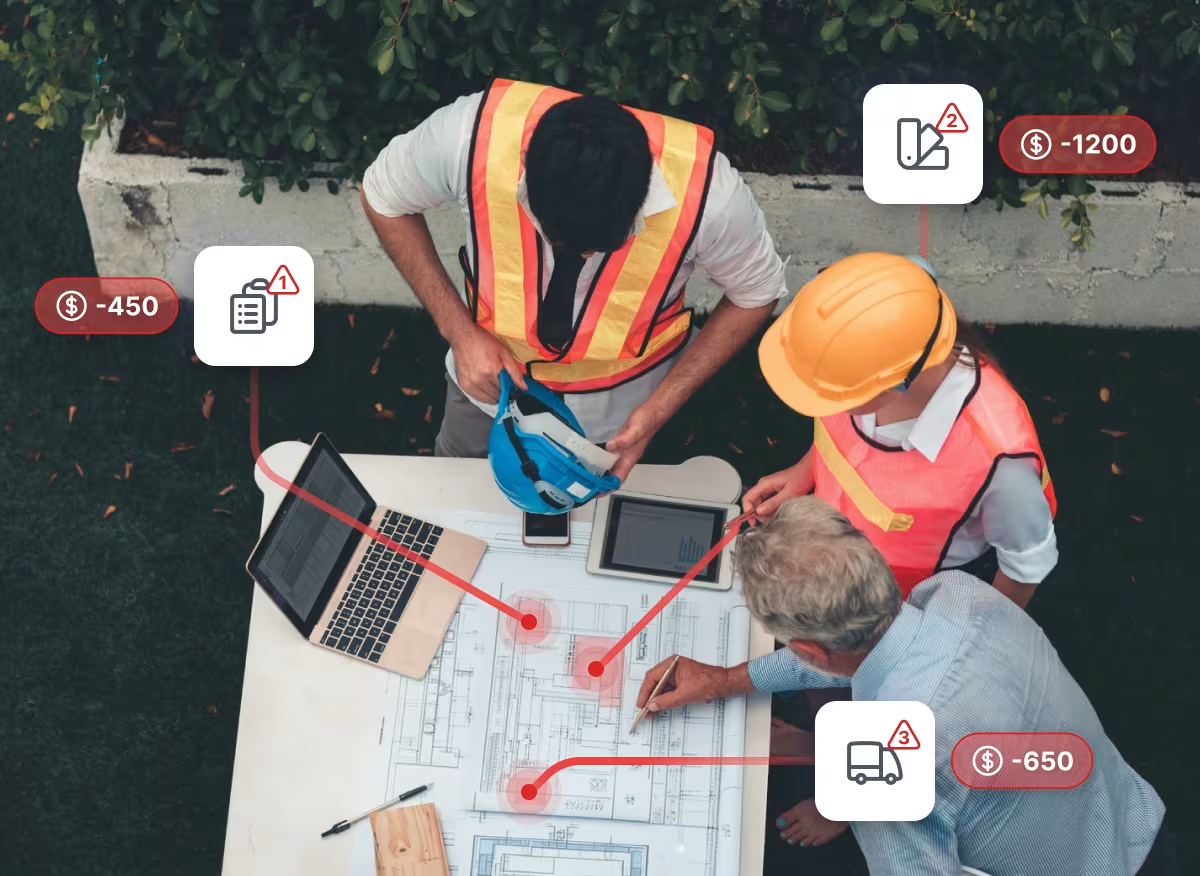
A door swing gets reversed, a few outlets move, a finish gets upgraded on a walkthrough. None of them feels like a change order, so none of them becomes one.
Adjustments like these happen on site all the time, usually before anyone decides whether they're worth raising.
Scope creep in construction, the gradual expansion of work beyond the agreed scope, often hides in those absorbed adjustments: a steady stream of small decisions that look insignificant one at a time and add up together. The cost usually becomes clear much later, when the project team can see the effect on margin but not the individual decisions behind it.
What helps is being able to see what the project is absorbing before it adds up, without turning every small adjustment into a change order.
What Causes Scope Creep in Construction?
Usually, scope creep comes from:
- An unclear or incomplete scope
- Design changes
- Owner or client requests made in the field
- Work approved informally on site
Larger changes from any of these are more likely to reach the formal change process, while smaller ones may be absorbed one at a time.
Each small change adds some labor or material cost, and absorbing any one of them can be a perfectly reasonable call when the work is minor and keeping the job moving matters more than stopping to formalize it.
The project still carries the combined cost of those decisions, while the formal change process only shows the ones that were raised. A dozen reasonable calls can add up to a significant cost without any one of them looking significant, creating a gap between the margin the project expected and the margin it ultimately delivers.
How Do Contractors Set a Threshold for Small Changes?
Every project has a practical threshold for what gets raised. Small adjustments often get absorbed because the added work is minor or the project team decides it isn't worth formalizing.
Whether any single call is right matters less than whether the people making those calls are working from roughly the same line. Try this on your next job: ask the superintendent, project manager and project executive at what point they would raise a small change.
If you get three different answers, look at what's driving them. One person may be thinking about a few hours of labor, another about material cost, and someone else about the client relationship or the administrative effort involved.
Nobody needs to use the same dollar amount. The project does need a shared understanding of where its practical line sits and what happens to changes below it. The threshold should decide what gets raised, not what gets recorded.
Why the Cost of Scope Creep Shows Up Late
Small changes are difficult to see collectively when nothing brings them together as changes. Once absorbed, each one may show up only as a little extra labor or material, disconnected from the decision that caused it.
Larger changes get priced and logged, so they’re visible by design. Cost reports can show that actual costs are moving away from forecast, but they don’t necessarily explain which small decisions contributed to that movement.
By the time a pattern becomes obvious, the project may already have absorbed weeks or months of small adjustments. The individual decisions made sense as they happened. What was missing was a live view of what they were adding up to.
How to Record Every Small Change Without Raising Every One
Recording a change and raising it are separate decisions, and the practical fix is to treat them that way. A field conversation can become a record without becoming a change order, so the change gets recorded on the day and whether to raise it gets decided later, with the full picture in view.
Whatever tool you use, a simple record can capture what changed, who requested it, when it happened, and a photo where useful. The important part is making that easy enough to do for the changes that don't seem significant at the time.
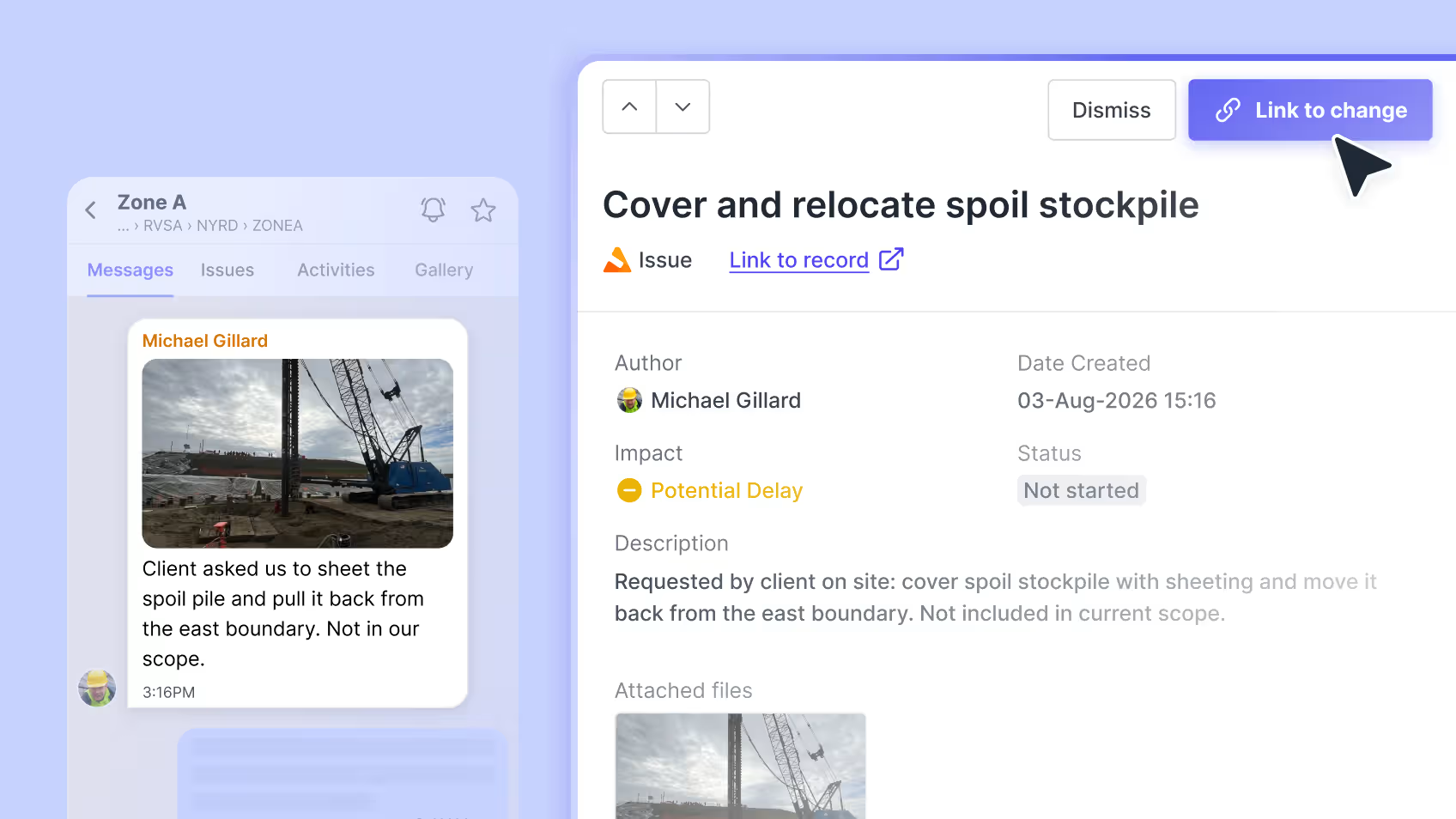
Shape is designed to make that capture part of the way crews already communicate on site. Messages and photos shared in Channels become timestamped project records, so a small adjustment can be recorded without someone having to start a formal change process.
When that activity points to potential change, Shape surfaces change alerts for the project team to review. The team can dismiss what doesn't require action and link relevant alerts to Change Tracker, where potential changes can be tracked as the job progresses. When the team decides to raise one, Shape drafts the change narrative from those records, with the messages and photos attached, for the team to review before it goes to the client.
That keeps the two decisions separate: record what happened, then decide what to raise.
A project team can still absorb a small change because it's the right call. The difference is that the decision no longer disappears with it, making it easier to see what the project is taking on while the work is still underway.
See how Shape helps you capture and manage change.
Keeping Small Changes From Becoming Lost Margin
Small changes are a normal part of every job, and absorbing them is often the right call. The margin risk comes when the project can't see what those decisions are adding up to.
Your change order process can keep handling what gets raised. The opportunity is to make what falls below that line visible too: record changes as they happen, keep the threshold for deciding what to raise, and review what the project is absorbing while the job is still live.
If small changes are slipping below your line, talk to us about your next project and we'll show you what recording them looks like on a live job.






Frequently Asked Questions

CONTENT SPOTLIGHT

SUBSCRIBE TO OUR NEWSLETTER
Get the future of construction control straight into your inbox.