Whether it's a mid-size build or a large, complex one, a handful of unrecovered changes is all it takes to erase the profit line entirely, all for work that got done, was agreed to on site, and never became a change order anyone could bill. On a job budgeting a 5-6% gross margin, there's no room to absorb even one of them, let alone a handful, before the closeout meeting even starts.
Here's what that looks like on the ground:
- A superintendent reroutes a mechanical run around a conflict, agrees with the owner's rep on the spot to keep the crew moving, and both consider it settled, until the rep leaves the project two months later.
- A sub's foreman flags extra foundation work in a group chat, your super agrees on the spot, and the message is buried by the time you need to bill the owner for it.
- An architect issues a supplemental instruction marked no cost impact, the crew builds it, and nobody says anything about cost until the work is already in.
Nobody was negligent, nobody hid anything, it was a capture failure, not a people failure.
How Much Unrecovered Change Can Cost Your Construction Profit Margin
Picture this: a $12 million project carrying a 5% gross margin. The profit the job is supposed to generate is $600,000.
Now picture twenty changes across that job, none of them big. Like a T&M day chasing an unmarked utility, an extra footing dig, or an architect's supplemental instruction absorbed as no cost impact. Call it $20,000 of cost each. That's $400,000 the job paid for and never recovered, which takes the delivered margin from 5% down to about 1.7%.
Exact numbers will vary by project, but the size is what creates the blind spot. A $20,000 change gets coded into general conditions or absorbed in a sub's base contract, trips no threshold, and surfaces later as margin fade nobody can trace back to a specific decision.
Verbal Agreements and Text Threads Don't Hold Up as Change Order Records
Most of the time, tracking change in the field either involves verbal agreements, a note in someone's phone, a photo texted to the PM, or an email that gets forwarded around. However, none of these are built to hold up under a closeout review.
You probably already have a change order module in Procore or Autodesk Construction Cloud, a pending change order log, and a daily report requirement. None of that is the gap as those systems manage a change once it exists as a record. The gap sits upstream of them: something has to become a record on the day it happens, from the person who was standing there. A daily report backfilled Friday afternoon from memory doesn't do that, and a change order module can only work with what somebody remembered to enter.
That matters because the contract clocks are shorter than most people assume, and the tightest ones run in the field. Under AIA A201-2017, a concealed or unknown condition has to be reported before the conditions are disturbed, and in no event later than 14 days after you first see it. An architect's order for a minor change is tighter still: if you believe it affects the contract sum, you have to say so before you build it, and performing it without that notice waives the adjustment.
The 21 days people tend to quote comes from a different part of the contract. That's the clock for initiating a Claim, and it opens well after the point where your exposure already started.
Contracts typically specify who has to receive the notice and how. This is why verbal agreements or text threads don't hold up as change order records. What actually holds up is a record dated the moment it happens and tied to the person who was there, not one pieced back together weeks later from memory or a buried message.
What Is a Construction Change Directive, and Why Can It Cost You More Than a Change Order?
In the standard AIA framework, a G701 change order means the owner and contractor already agreed on scope, price, and time before the work happens. A G714 construction change directive (CCD) is different; it tells the contractor to proceed with a change before an agreement is reached, usually because the work can't wait for a price to get negotiated first.
A CCD is a formal document: signed, numbered, authorized by the owner. It also doesn't make you wait until closeout to get paid. AIA's instructions for the G714 are explicit: "amounts not in dispute may be included in applications for payment."
In practice, "not in dispute" means costs you can substantiate that month get certified and paid that month. The ones you can't substantiate get held back and pushed to final determination, where they sit alongside every other open number at the end of the job. Whatever still can't be backed up by then is what gets written off.
That's what makes a CCD cost more than a change order. With a change order the number is already agreed, so the record confirms what everyone signed. With a CCD there is no agreed number yet, so the record is what sets it. On this kind of change, capturing that evidence matters just as much, if not more.
Turning a Captured Record Into a Faster Negotiation
Capturing a change order record starts with timing. A change captured the moment it happens can still meet a contract's notice deadline, while one written up weeks later usually can't. A record built in the field at the time of the decision, dated and in the words of the person who was there, carries more weight later than one pieced together after a dispute has already started.
Shape is built around managing change on site. On a job running Shape, this is where the change gets captured:
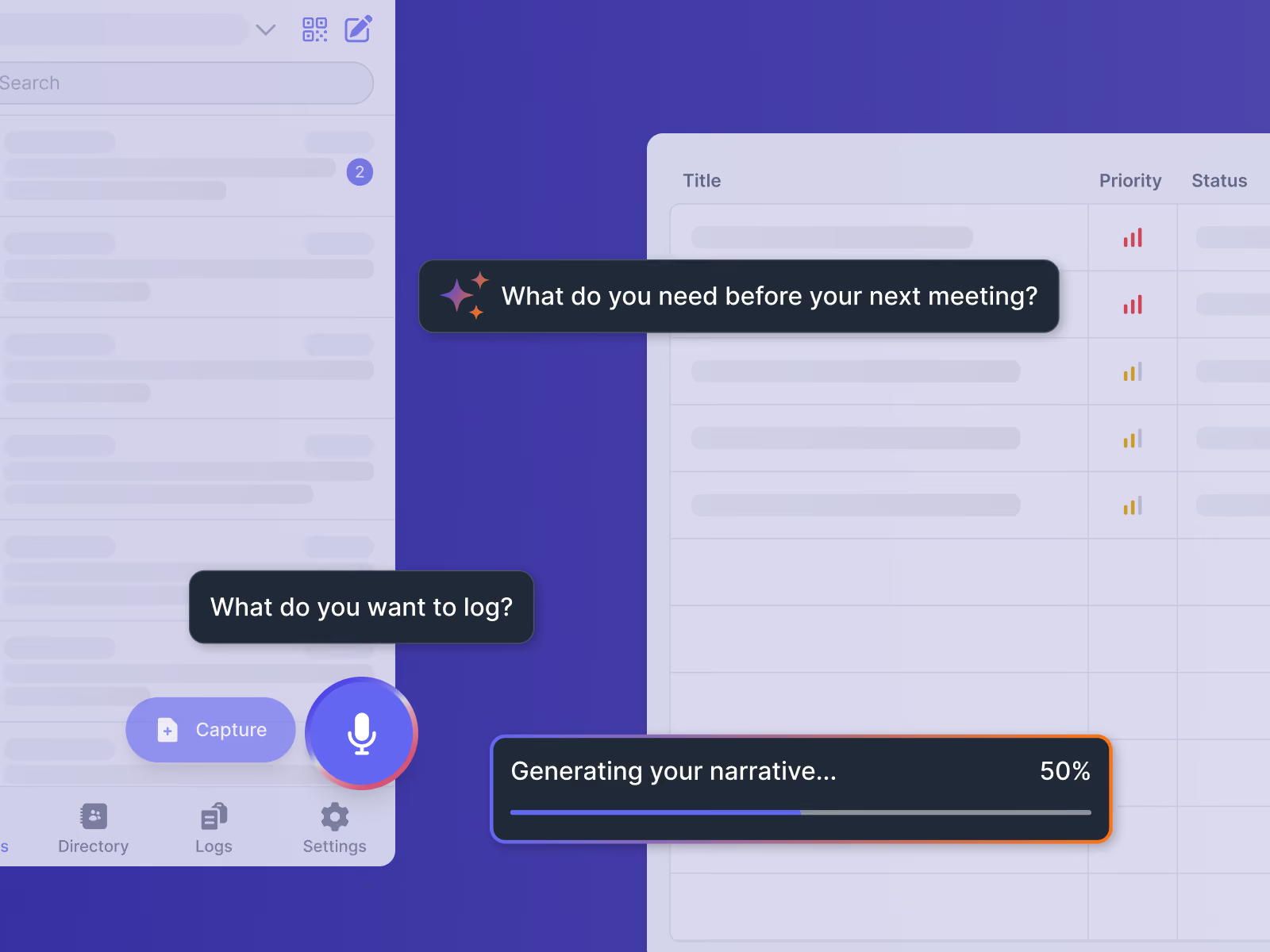
- A field worker snaps a photo of the change and drops a one-line note in Channels, the same crew conversation they're already using. No separate form to open.
- That note and photo land in the project's records automatically, dated and timestamped, instead of sitting in a camera roll or a buried thread.
- Anything that points to a genuine change raises a change alert and collects on the Change Tracker for someone to review: keep what's actionable, link the evidence, move on.
None of this creates or files the change order itself, that still gets built and filed through your normal process, it just makes sure the record and its evidence exist and are exportable when someone needs them.
See how this works as a connected workflow on a real project.
Capturing the record is only half of it. Pricing and negotiating that change order weeks or months later usually starts with reconstruction: piecing together what happened and who agreed to it, often with an owner's rep whose memory doesn't match yours. A dated record doesn't do that negotiation for you, but it moves the starting point. Instead of arguing about whether the change happened at all, the conversation can start on the number.
Getting the Field to Actually Keep Up With Logging Changes
The usual doubt here is less about whether the record would help and more about whether the field team will actually keep it up. A superintendent already fielding calls from three trades isn't adopting a new habit just because it's good practice, and this doesn't ask them to: they log the change in the same conversation they're already having with the crew, not an extra task layered on top.
Get the GC's guide to capturing complete records without site pushback.
If you've ever closed out a job wondering where the margin went, the honest answer is usually not that the work went badly. It's that some of the work never made it onto paper while it still counted. Fixing that doesn't require a new process everyone has to remember to follow. It requires capturing the record where the work already happens, before the person who remembers it moves on and the trail goes cold.
👉 Speak to an Advisor to walk through your own project's change order exposure and see where a captured record would turn an argument about whether it happened into a conversation about what it's worth.






Frequently Asked Questions

HIGHLIGHTED CONTENT

SUBSCRIBE TO OUR NEWSLETTER
Get the future of construction control straight into your inbox.