Change orders get disputed on plenty of projects, in fact, disagreements over scope are the single leading cause of construction disputes in the Americas with more than one in four distressed projects. It could be a scope gap nobody caught or a back-charge nobody signed off on, and eventually somebody has to sit across a table with an account that actually holds up. Teams often get weeks to put a case like that together. What happens when you only have three days on the calendar to do it?
The Cost of Walking In Half-Built
When you're in the change order negotiation, it's rarely just what the work cost that gets pressed. It's also:
- what changed,
- when it changed,
- who knew about it,
- who authorized the work, and
- what records support the position you're taking.
If you have to assemble those answers at the last minute, the gaps become part of the conversation. A missing timeline can look like a missing case, an unsupported cost gets challenged, and a question about authorization sends you back into messages, photos, daily reports, and emails looking for something that should have been easy to produce.
The longer that takes, the longer the change stays unresolved, and when the change is tied to payment, the cost of that delay isn't limited to the time spent chasing the record, it can sit in the job's cash flow and, ultimately, in its margin.
What You Have Already Tried
The work already has a process. When a change needs to be defended, you open a blank document and start pulling together the records behind it: messages, photos, daily reports, emails, cost information, and anything else that helps establish what happened.
Some of that record was captured weeks earlier, often by a field team trying to document what happened once there was finally time to sit down and do it. The rest gets assembled later, when you have to turn those records into a coherent account. The work is legitimate and the records exist, the problem is that you still have to connect them by hand.
This isn't a failure to prepare, it's what preparing looks like when the information is scattered across different places and the account still has to get built. The real problem is the time and attention that goes into reconstructing a change that has already happened. There's a way to close that gap, and it starts with what AI can do with the records that already exist.
How AI Builds the Record Before You Open a Document
Shape captures what happens on site as it happens, instead of relying on someone to reconstruct it later, and the AI features covered here run on top of that record.
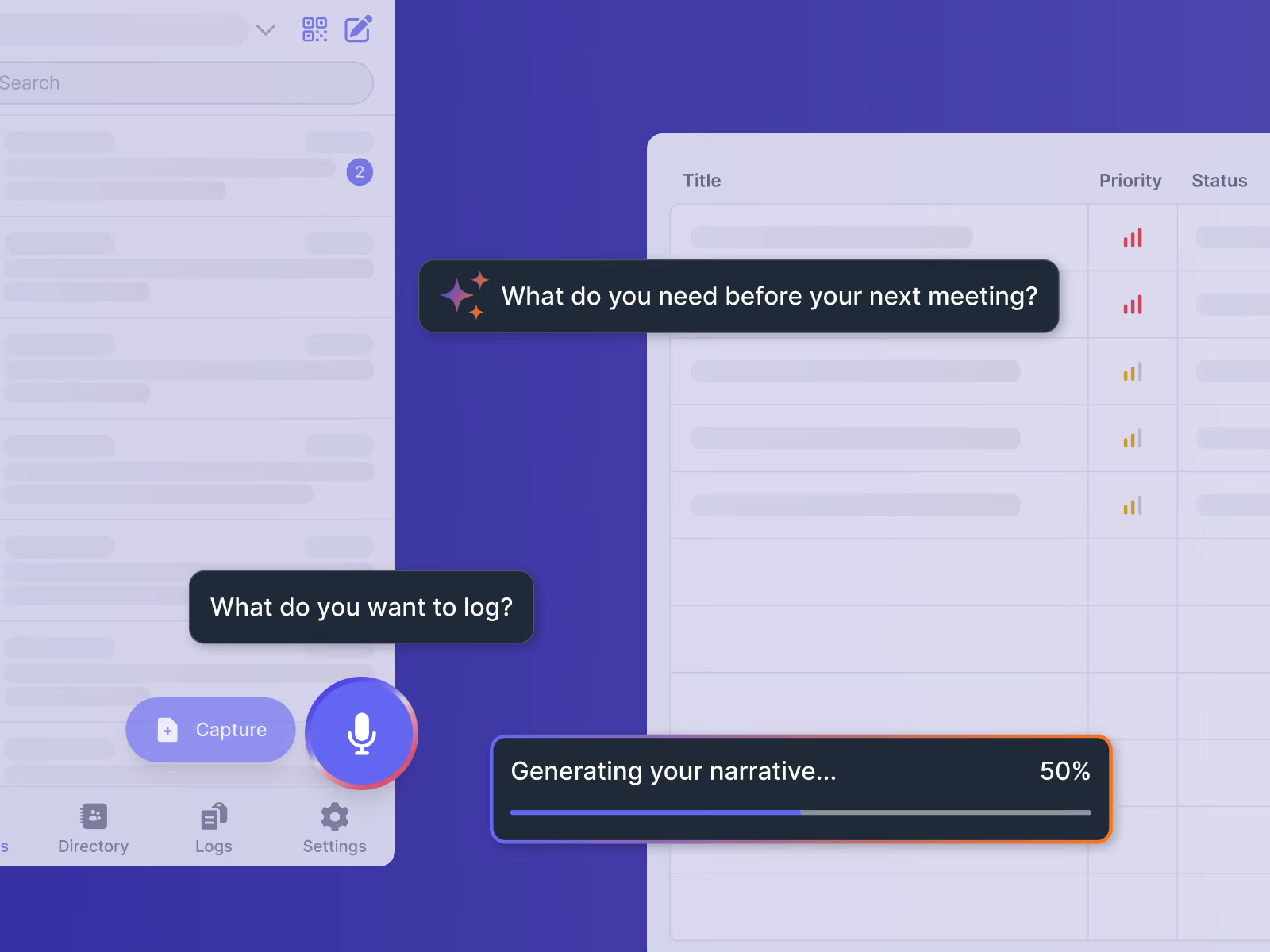
Picture a project running on Shape: Snapping a photo of a change takes seconds, typing out what actually happened, why, and what it affects takes minutes most people don’t have while they’re still standing in front of the work.
With Voice Capture however, site teams can give the same detail they’d give someone standing next to them without stopping to type any of it out when change happens. The update lands as a transcribed, timestamped entry, already tagged to the change, sitting with the rest of the record instead of buried in a separate thread.
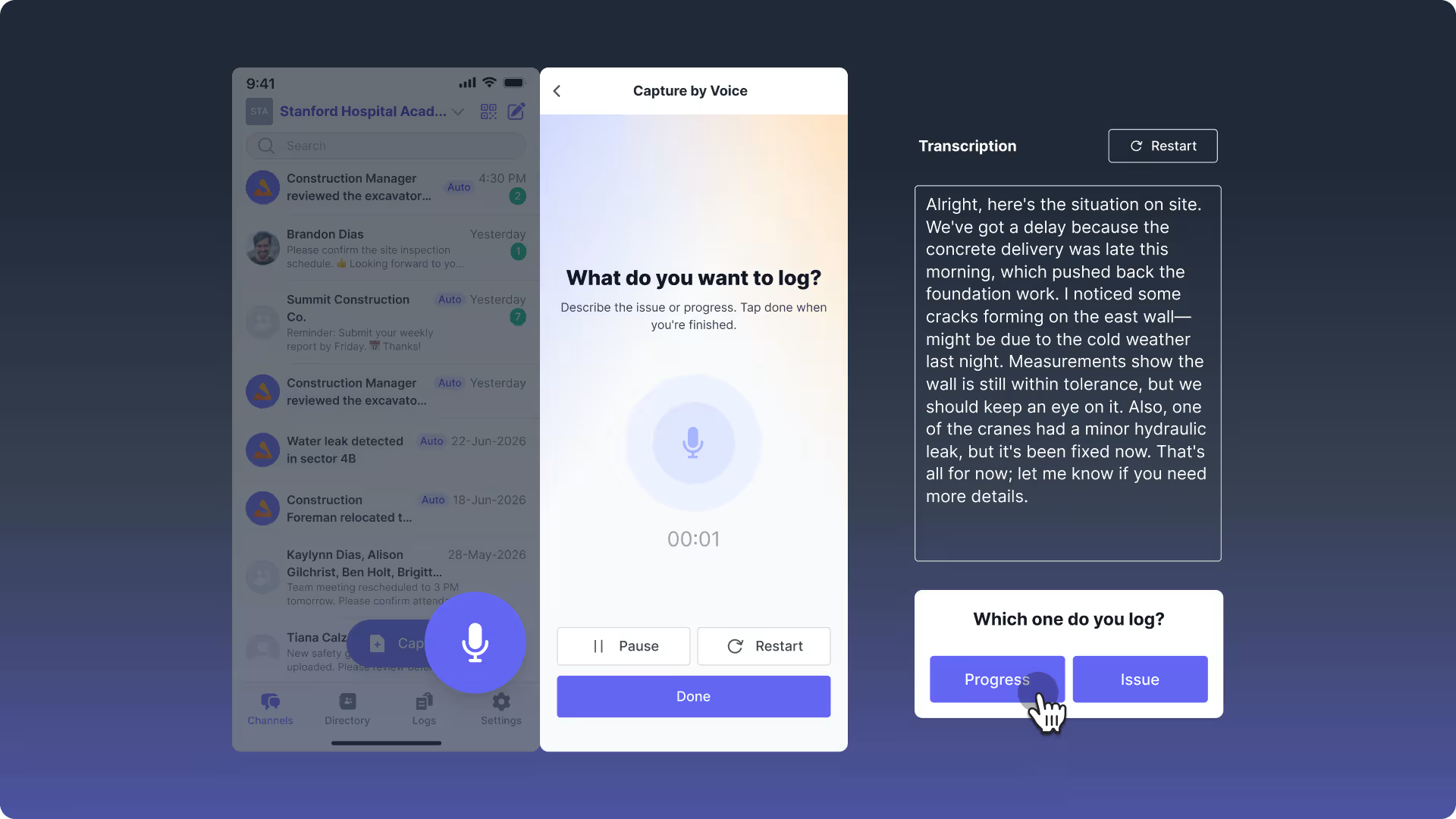
From the claims-consulting side, retrospective claims built with little contemporaneous support rarely hold up. This makes it so there’s something to build a case from instead of a blank page, and a change captured while it’s happening also reads as more credible later than one reconstructed.
Writing doesn’t need to start from nothing either. Narrative Builder drafts the account directly from the records already tied to the change and the change’s own details, laying out what happened, when, and what it’s based on in the shape of a narrative instead of a folder of loose messages. It saves against the change itself, not in a separate document, so the reasoning stays next to the evidence behind it. You read, edit, and decide what stays.
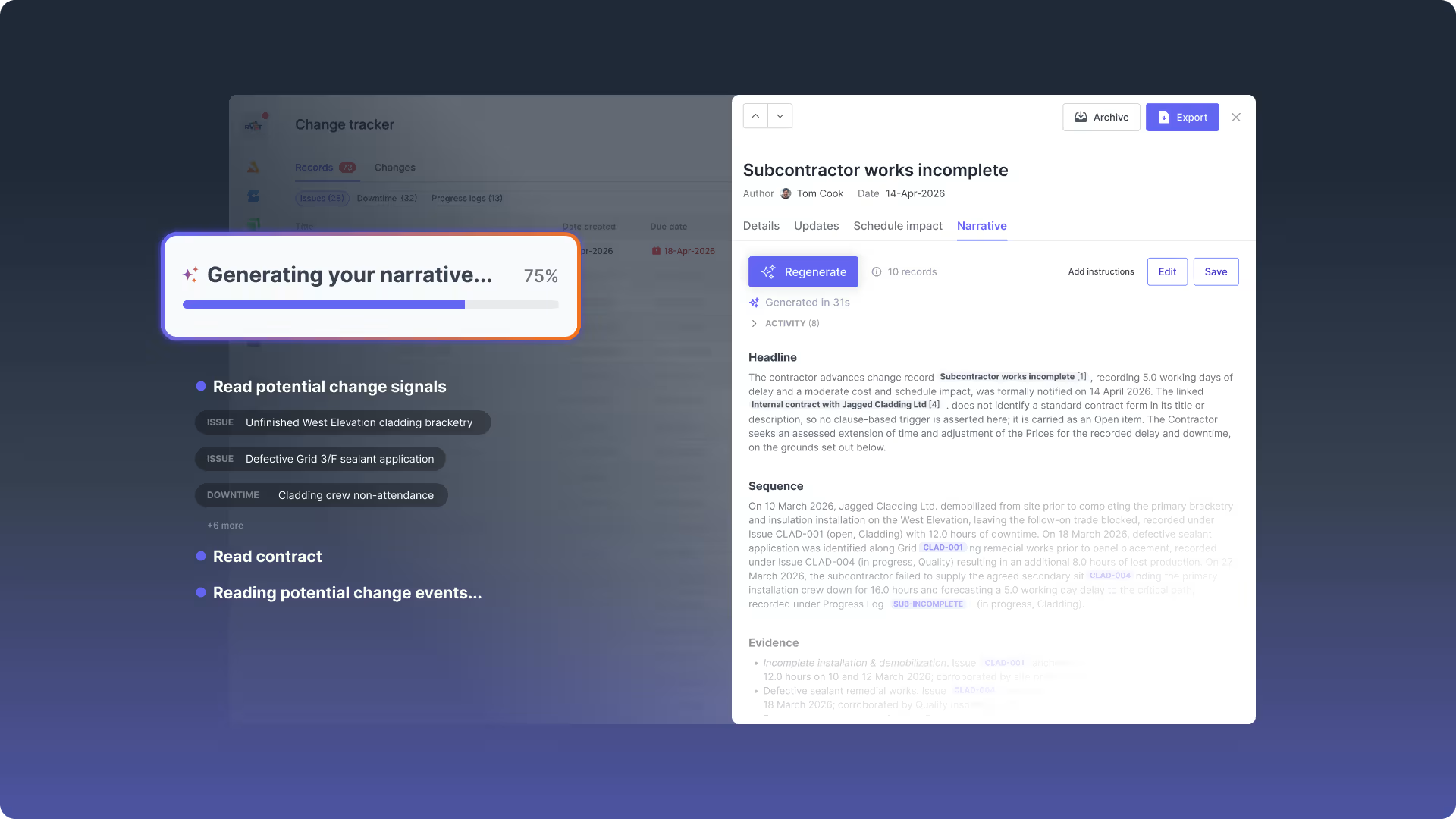
See how Shape ties a record to a change.
The Days Before the Meeting
How AI Finds the Weak Points in Your Case
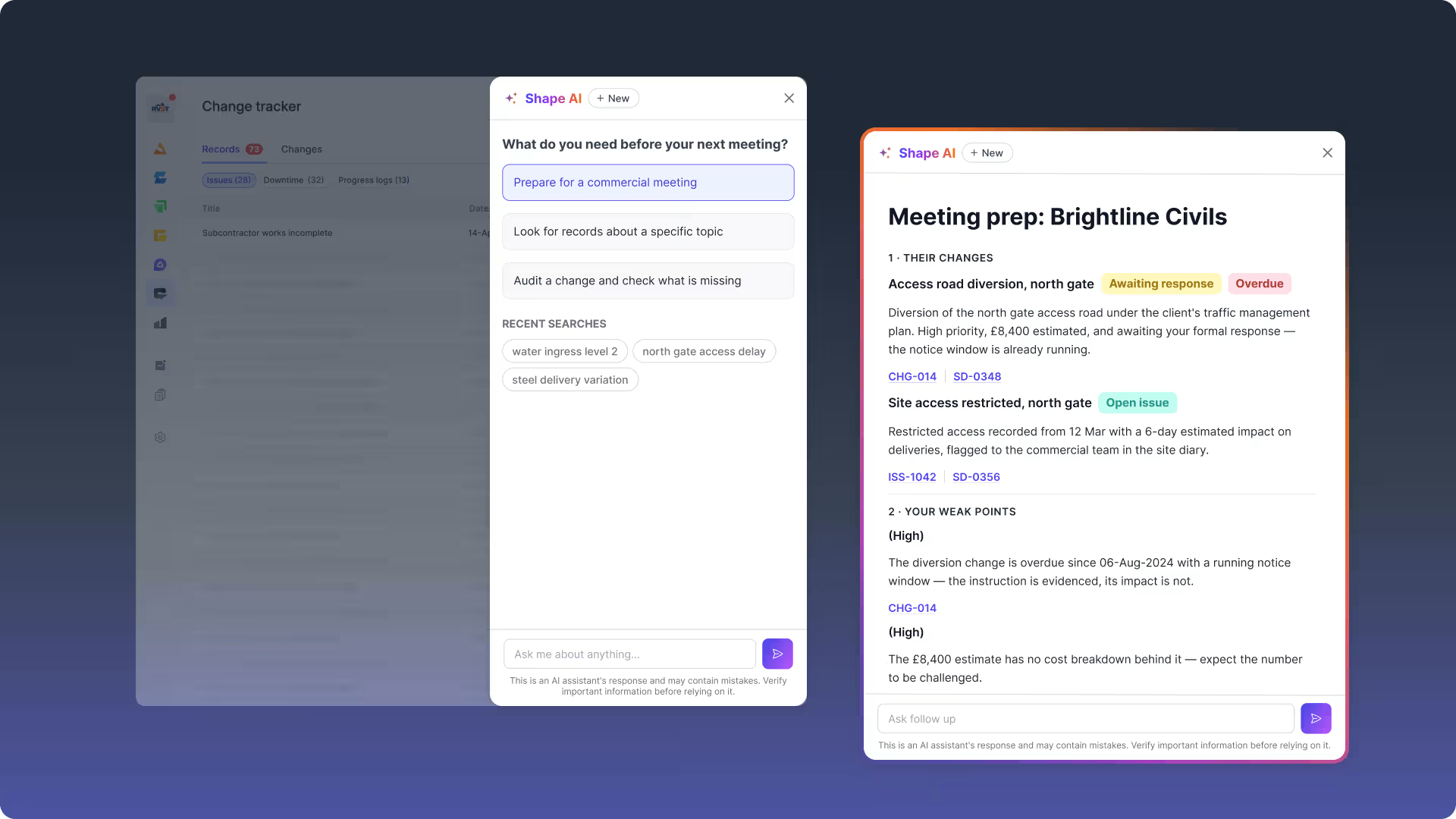
Before the meeting, you need to know where the account is thin and where the other side is going to push. Shape AI answers questions like that directly, drawn from everything on the project tied to the change:
- where the position is weakest
- what’s still missing to substantiate it
- what a reasonable person on the other side would argue first
Ask it the way you'd ask a colleague who'd read every record on the project, and it answers the same way: here's what's thin, here's the record that shows it. Every answer links back to the record it came from, so you can open that record and check it yourself before you use it in the room.
Does AI Take the Judgment Out of Your Hands?
Narrative Builder and Shape AI only work from records that already exist on the project. Neither invents a fact, a figure, or a detail that isn't already there. Every draft is fully editable before it goes anywhere, and every answer shows you the exact record behind it, so you can verify it yourself instead of taking it on trust.
You are not handing your case to something you cannot check, rather, you're checking it faster, because the source is one click away instead of buried in a folder.
Does Checking AI's Work Cancel Out the Time It Saves?
Editing a draft that already starts from the right records, in roughly the right shape, takes less time than writing one from a blank page, even counting the time it takes to check it. A direct answer with its source attached takes less time to verify than reading through a folder to find that source yourself in the first place.
AI saves time by removing the searching and building that comes before review.
You don't lose a negotiation like this one because you're outmatched in the room. You lose it because the account was still being assembled right up until you walked in, instead of already tested for the exact weak points the other side finds anyway. That gap closes when the record starts building itself the moment the change happens.
If you're heading into a negotiation like this one and want to see how the record, the draft, and the questions actually connect on a real project, Speak to an Advisor.






Frequently Asked Questions
HIGHLIGHTED CONTENT

SUBSCRIBE TO OUR NEWSLETTER
Get the future of construction control straight into your inbox.