You’ve probably told your site team to report changes as they occur, but it still pans out the same way: something changes in the field, the work moves on, and you hear about it days or weeks later.
- A crew finds an obstruction and works around it
- A detail doesn't work as drawn, so someone comes up with another way to build it
- A decision is needed, so someone waits for an answer and then gets on with the next task
Most site teams, especially the experienced ones, know each of these counts as a change. What they don't have, in the moment, is the time. Writing it up properly means devices they may not be carrying, signal they may not have on site, or time they don’t have between one task and the next.
So the choice most days comes down to finishing the job in front of them or stopping to document something that's already happened, and finishing the job wins, correctly. By the time the change reaches the office, the work may already be finished, and the details that would have made it easy to understand and price are harder to reconstruct.
What Counts as a Change on Site
A change is any deviation from the plan, the drawings, or the sequence of work, whatever the reason and whoever made the call. Most of the ones that go unreported take one of a few familiar shapes:
- An out-of-sequence instruction, work done in a different order than planned, for a reason nobody wrote down
- A verbal decision given on a walkthrough, with no paper trail behind it
- Time lost waiting on an answer to an RFI, without a formal notice of delay
- Working around a hidden condition, a clash, or a dimension that doesn't match the drawings
- A trade doing a fix outside their scope because it was faster than waiting for the right one
None of these look like a change order in the moment. Each one is worth a photo and a line, in case it ever needs to become one.
Why a Late Change Costs You More Than Time
Most contracts put a window around when a change has to be raised and evidenced to stay recoverable, and that window is tighter than most people expect, often measured in days to a couple of weeks. By the time a change surfaces in a status meeting, that window has often already closed.
What could have been a straightforward change order becomes an argument about whether it happened, who authorized it, and whether it's too late to claim. The same clock that closes off cost recovery usually closes off a schedule extension too, so a late change can cost you time on the program as well as money. You end up absorbing the cost, or spending far more time chasing evidence after the fact than it would have taken to capture it on the day.
Why None of It Actually Works
Every fix tried so far assumes the missing ingredient is memory, discipline, or care, when the actual missing ingredient is time, and none of these create any:
- Toolbox talks and standing instructions ask someone to remember, hours or days later, to find the time to write something up. By then the job has moved on, and so has their attention.
- A change notification form asks someone to stop mid-task, open a separate tool, and write a structured account of something they've already solved and moved past, exactly when they have the least time to spare.
- Following up in person only catches whatever's still fresh enough to recall that week, which usually means the big items, not the small ones that quietly add up.
A superintendent who reroutes a duct run around an unexpected obstruction knows that's a change. Writing it up properly, on a phone with no signal or a site office ten minutes away, isn't a five-second job, and on a busy day it's the thing that loses.
There's a quieter reason all of this stalls, too. Documenting something well enough to hold up later is an office-shaped task landing in the middle of a field-shaped day. The habit doesn't build itself, either: flagging something only becomes routine once doing it stops feeling like extra work or an invitation for scrutiny, and most of what gets tried skips straight past that and expects the habit to already exist.
What actually holds up is moving the documentation step off the person under time pressure on site, and putting it in front of someone who already has the time and the evidence to hand.
How to Fix Unreported Changes
The fix is not asking site teams to report more. It is making sure they do not have to record the same thing twice. Most crews are already capturing what happens in the field, usually in group chats and text messages:
- a photo of the blocked area,
- a note about the delay,
- a quick message explaining what changed.
The information is already there. The problem is that it is rarely captured in a way that reaches the people who need it or can be used later as a change record.
The field needs a way to flag what happened quickly, without stopping the work to complete a separate documentation process. The goal is not to turn a field note into a finished change order, rather, it's to capture the moment well enough that someone else can review it, understand what happened, and follow it through.
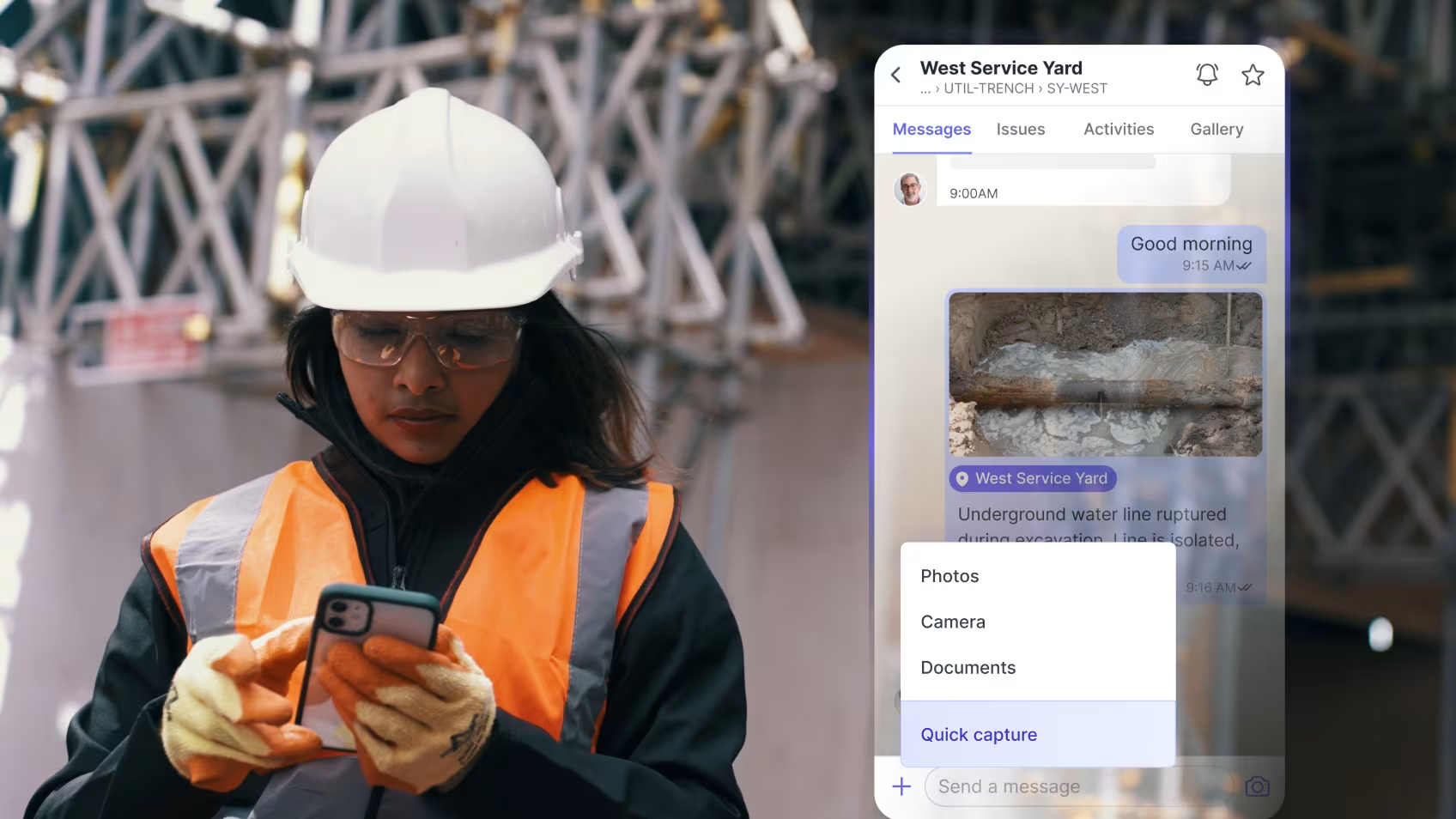
Shape is a field-first construction change management tool that gets field change into a usable record, keeps the evidence together, and makes the handoff into the existing change-order process much easier.
On a job running Shape, a field worker or subcontractor can post the same photo and note in Channels, Shape’s messaging tool, using the same conversation they are already using on site. There is no separate form to open, and it works without signal, syncing when the device comes back into range. A basement or steel deck with no reception does not have to mean the moment is lost.
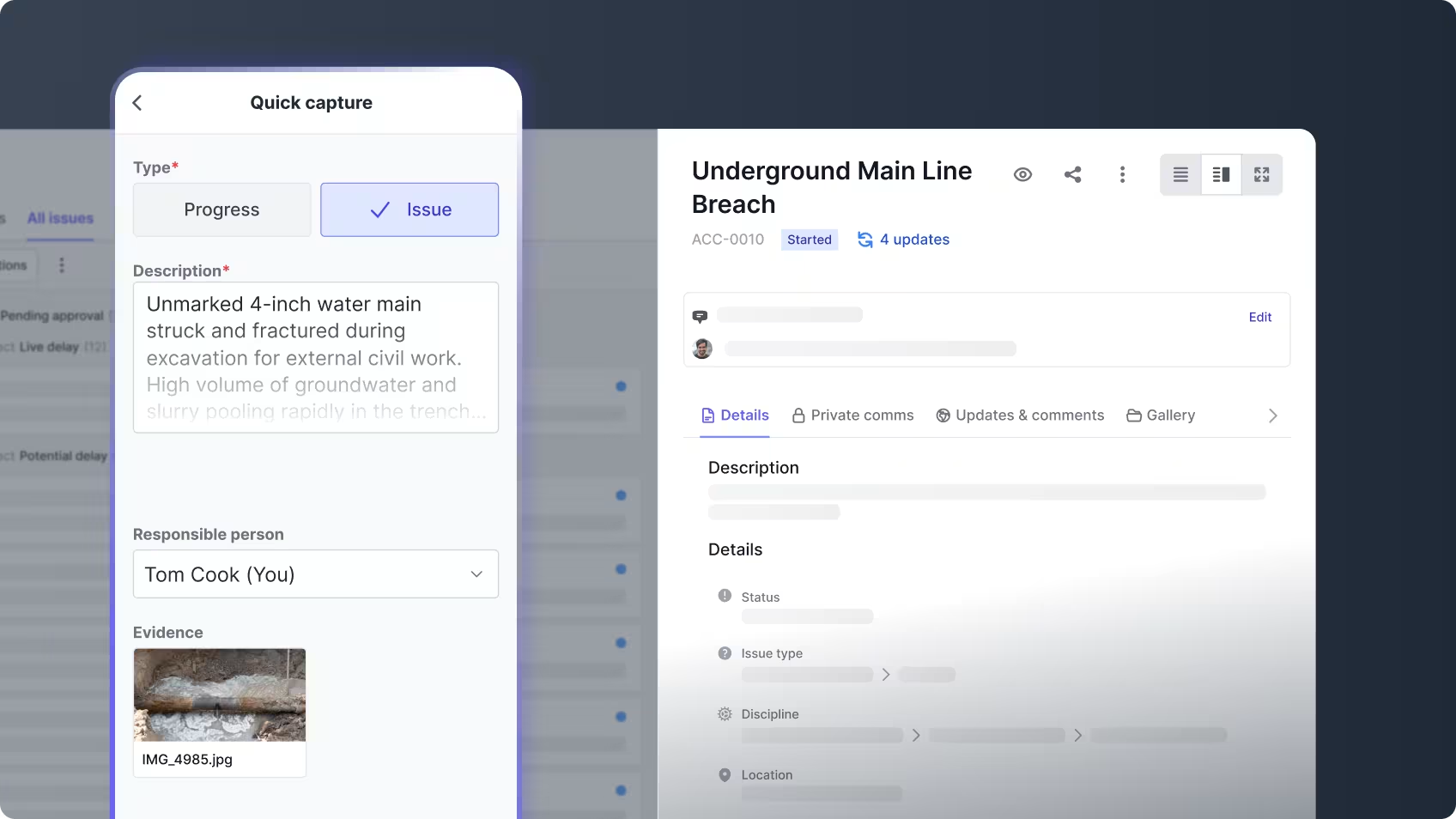
That photo and note become a timestamped Issue Tracker record without anyone stopping to rewrite what happened into a formal report before getting back to the work.
When an issue signals potential change, Shape’s Change Tracker raises a change alert and brings the relevant record and evidence together for someone in the office to review. This makes sure the evidence reaches that person while it is still clear, dated, and connected to the work.
By the time a change order needs to be built, the record is already there: the photo, note, timing, and supporting evidence, captured as the work happened rather than reconstructed from memory a week later. Narrative Builder can turn that record into a first draft of the claim narrative, cutting most of the writing out of the process.
Conclusion
Site teams don't miss changes because they're careless. They miss them because they don't have the time, signal, or spare minutes to document a change properly in the moment, and no amount of reminding creates any of those. The gap closes when documentation moves to someone who already has the time and the evidence in front of them, not when the site team gets asked to find minutes they don't have.






Frequently Asked Questions

CONTENT SPOTLIGHT

SUBSCRIBE TO OUR NEWSLETTER
Get the future of construction control straight into your inbox.