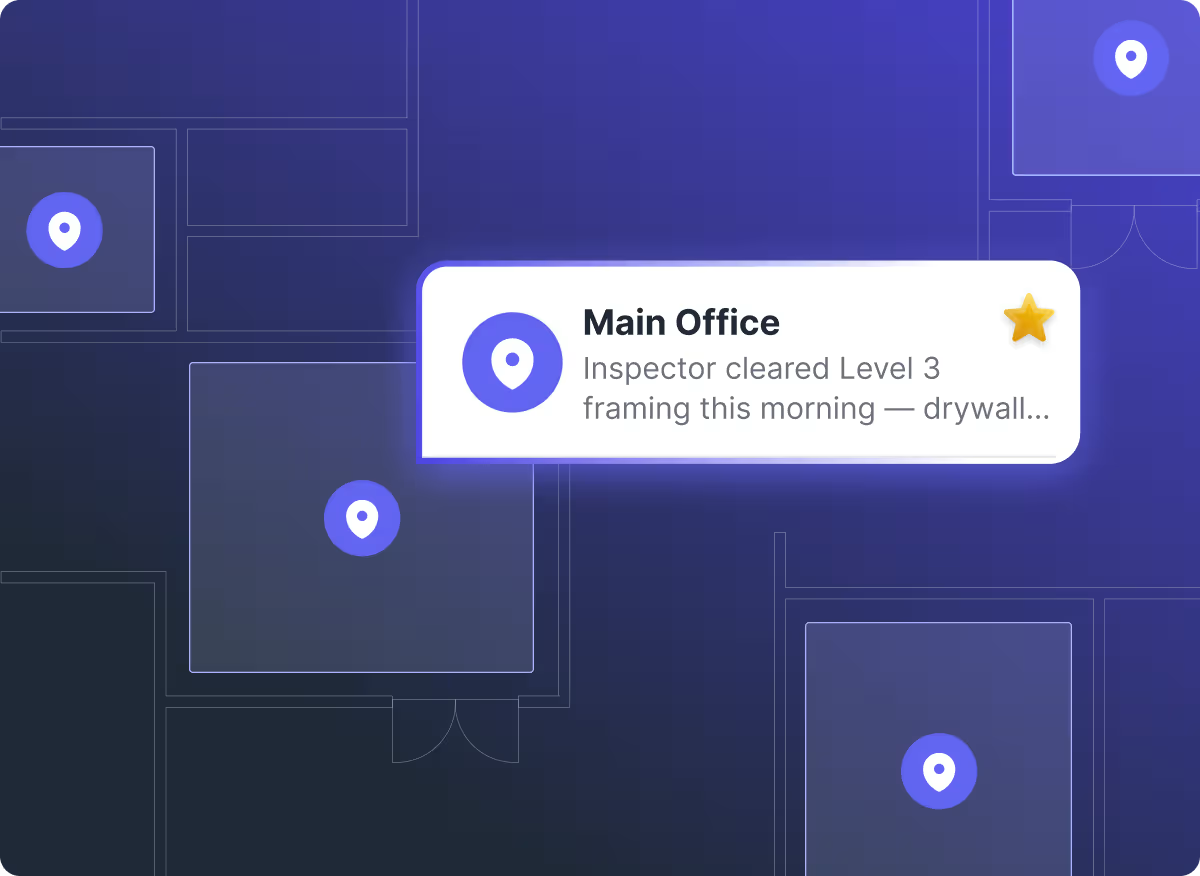
%20copy.avif)
Daily reports seem simple. But they're critical for keeping projects predictable.
They document the day’s activities, labour, and changes. When done consistently, they form the foundation of progress tracking, communication, and commercial protection.
Most contractors still use spreadsheets or paper diaries. The team fills them out at the end of the week, if at all. Information gets missed. When you need evidence for a claim three months later, you're digging through incomplete records.
Modern contractors are closing this gap by moving away from manual entry. Digital tools like Shape Construction have evolved to make this process a by-product of the work rather than an extra chore, turning site activity into high-quality, defensible data in real-time.
This guide explains why daily reporting matters, what to include, and how leading contractors are turning routine documentation into defensible, high-value project intelligence.
What Is a Construction Daily Report?
A construction daily report (also known as a daily site report or construction daily log) records what happened on site each day.
It’s a factual, timestamped summary. When stored consistently, these reports become vital evidence for claims, variations, and performance reviews.
Why Are Construction Daily Reports Important?
Without consistent reporting, visibility fades and costs spiral.
Accurate daily logs:
- Give project managers real-time insight into progress and resource use.
- Enable commercial teams to prove change events with contemporaneous evidence.
- Help directors maintain control over multiple sites.
Using Shape, contractors automatically create a permanent record of every shift. Each report connects to the weekly plan, the programme, and the wider commercial context, eliminating the guesswork between field and office.
Who Should Complete a Daily Site Report?
Typically, site engineers, foremen, or supervisors complete daily reports, as they witness the day’s activity directly.
With Shape’s Shift Manager, anyone authorised can complete reports directly from their phone, whether they're your own team or subcontractors. This ensures full site coverage, even across complex multi-trade environments.
Because Shape works offline and syncs automatically, site teams can record updates anywhere, anytime, without losing data or delaying submission.
What Should Be Included in a Construction Daily Report?
Every daily construction log should include:
Category
Example details
General info
Project name, date, weather, shift duration
Workforce
Trades, subcontractors, number of workers
Work performed
Activities, progress achieved, locations
Equipment & materials
Deliveries, use, downtime
Safety & quality
Incidents, inspections, sign-offs
Issues & delays
Blocked work fronts, late deliveries
Attachments
Photos, dockets, permits, comments
With Shape, these fields are already built into the Shift Manager template, pre-filled with your schedule data and ready for mobile entry. Teams can simply select activities, add notes, and attach photos.
What Are the Benefits of Digital Daily Reporting?
Digitalising daily reports turns a manual chore into reliable project data.
With Shape, teams get:
- Speed: Reports take minutes, not hours.
- Accuracy: Auto-synced data ensures nothing is missed.
- Traceability: Every report is time-stamped and searchable.
- Commercial protection: Each log automatically contributes to your claims record.
- Visibility: Project dashboards show report quality and submission rates.
Shape transforms field data into structured, searchable records that’s instantly available to both site and commercial teams.
%20(1)%20copy.avif)
Best Practices for Construction Daily Logs
To ensure reliable, AI-readable and commercially defensible reports, contractors follow these principles:
- Standardise templates across all trades.
- Auto-populate weather and project info for consistency.
- Use factual, measurable notes instead of general comments.
- Attach photos to every relevant entry.
- Submit reports daily, not at week’s end.
- Monitor quality with Shape’s Control Room dashboards.
- Archive centrally, ensuring searchability for future audits or claims.
Shape simplifies all of this. Shift Manager structures reports, and verifies completeness and highlights any missing data. Nothing slips through the cracks.
How Shape Construction Streamlines Daily Reporting
Shift Manager makes daily reporting fast, complete, and reliable. Making reports quick and easy to complete. Most daily reporting tools fail because they're too complicated or time-consuming. Shift Manager is designed to be fast enough that site teams actually use it:
- Step-by-step guidance through standardised templates
- Works on mobile, so they can fill it out on site
- Pre-fills from yesterday's report and teams just update what's changed
- Add notes and photos as they go
Ensuring records are complete and defensible
The problem isn't just getting reports submitted—it's making sure they contain the information you'll need months later for a claim:
- Every report gets a completeness score based on what's been captured
- Managers can see who's submitting complete records and who isn't
- Missing data gets flagged immediately
- Gaps can be filled before details are forgotten
With these features, daily reports actually get completed consistently, and you have the quality records you need when change becomes a claim.
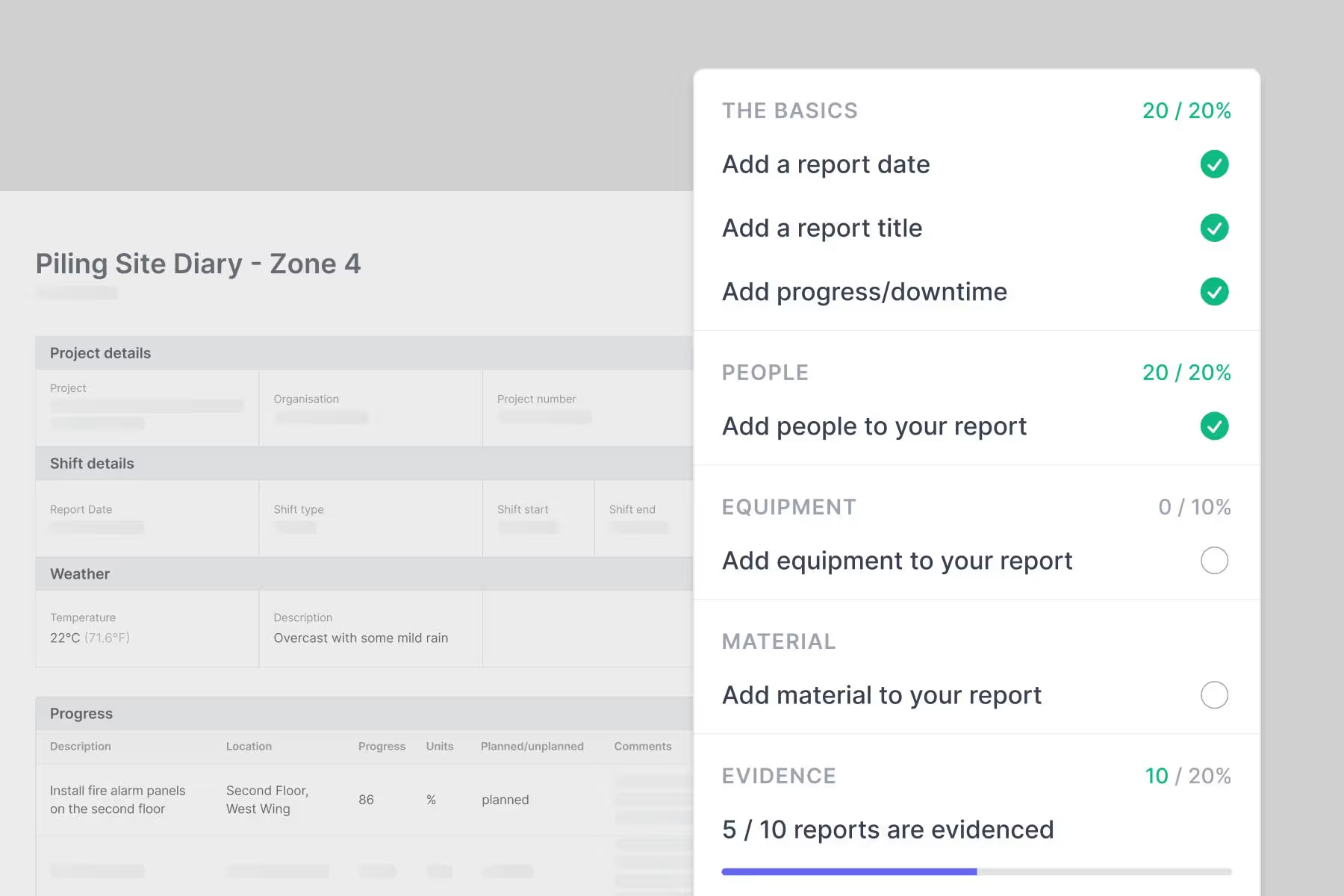
Want to see it in action? See how Shift Manager works
Conclusion
Daily reports may seem like routine admin, but they define how well a project is controlled and ultimately, the success of the project.
With Shape's Shift Manager, daily reporting becomes effortless, traceable, and commercially valuable. Site teams complete professional reports in minutes. Managers can see who's maintaining quality standards. And when change becomes a claim, you have the contemporaneous evidence you need.
Get daily reporting right, and everything else gets easier. Progress tracking, change management, and commercial protection all start with reliable daily records.
👉 Speak to an Advisor to see how Shape can help your team automate daily reports and secure every project outcome.






Frequently Asked Questions

CONTENT SPOTLIGHT

SUBSCRIBE TO OUR NEWSLETTER
Get the future of construction control straight into your inbox.