Keep subcontractors accountable for what they said they’d fix
Every issue gets logged from site with the responsible subcontractor and a due date attached. You see what's open, what's overdue, and who's letting it sit.
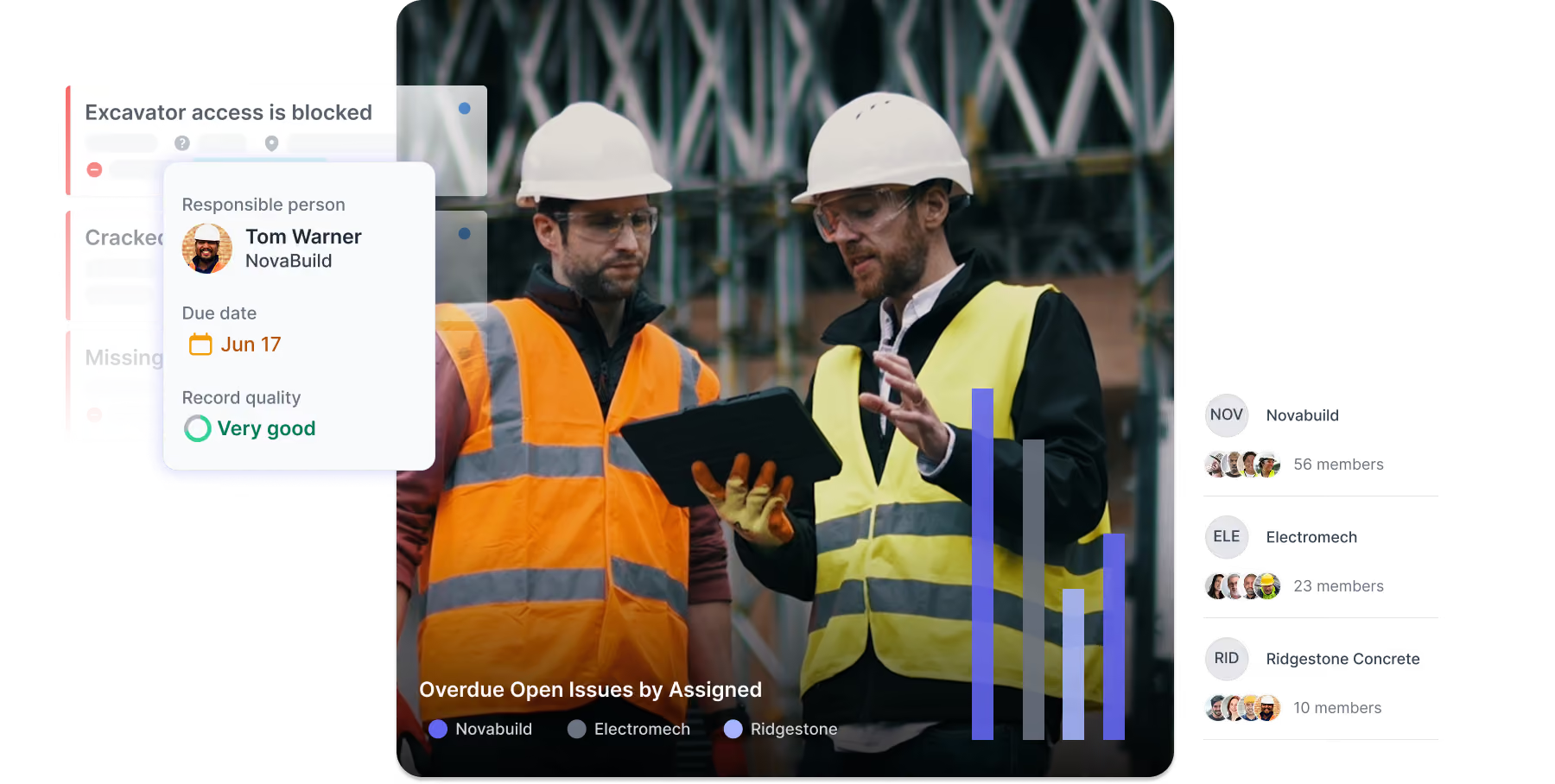
LEADING CONTRACTORS USE SHAPE TO TRACK SUBCONTRACTOR ISSUES THROUGH TO RESOLUTION








THE PROBLEM IS...
Nothing holds a subcontractor to the fix they agreed to

Details are scattered across different places
Something agreed in a text message, a photo on someone's phone, a note in the meeting minutes, a line on a spreadsheet. You can't see the full picture of what's blocking the project.

Commitments slip with no record
A subcontractor agrees to fix something, then it drifts. Without a record of who committed to what and when, you have nothing to point to when you follow up.

You can’t tell who's reliable and who isn't
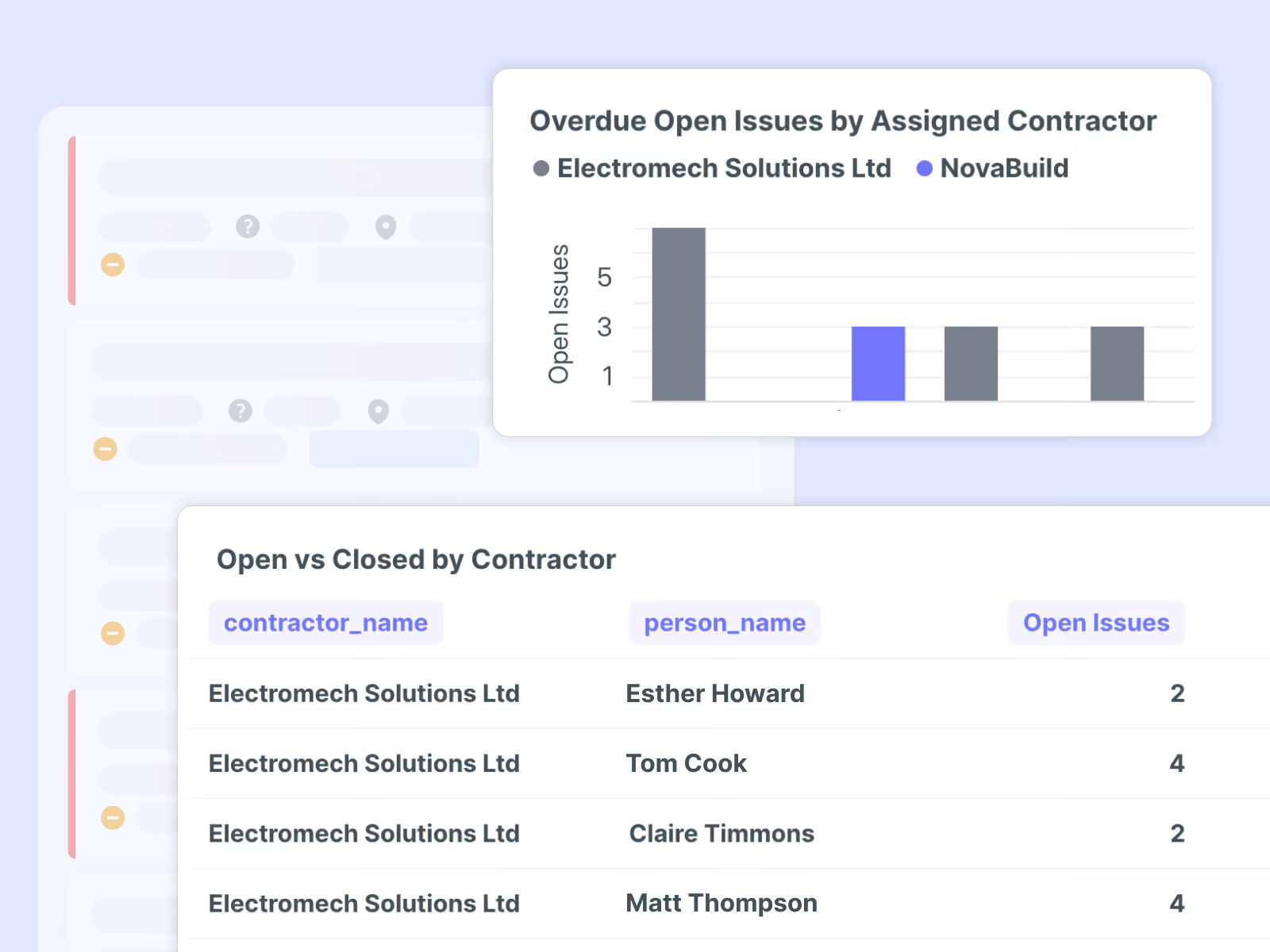
With no visibility into who resolves issues and who lets them sit, you find out which subcontractors are unreliable only after a problem has already cost you time.
Get every subcontractor issue logged from site
Site teams flag issues without leaving the conversation
When something stops or slows the work, site teams raise it as an issue through a simple messaging app. It becomes a tracked issue with photo evidence, the location, and responsible subcontractor.
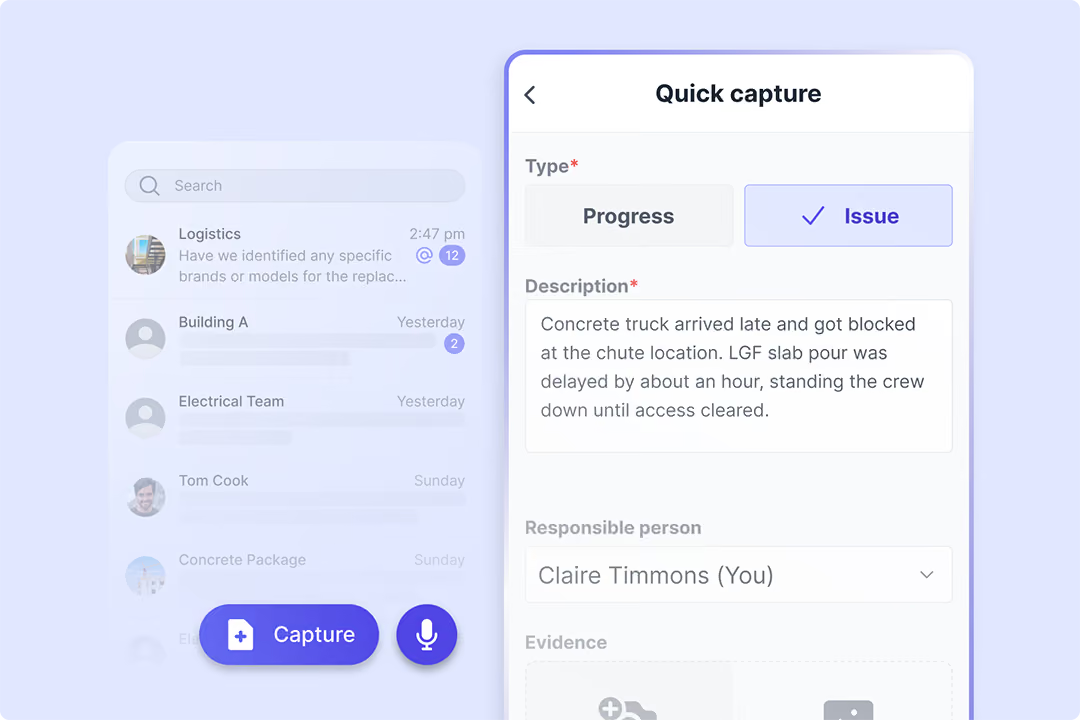
Every issue automatically starts a dedicated group chat
Everyone involved gets added, and the back and forth about that problem happens there. What gets said, what gets agreed, and what gets done all become part of the issue record.

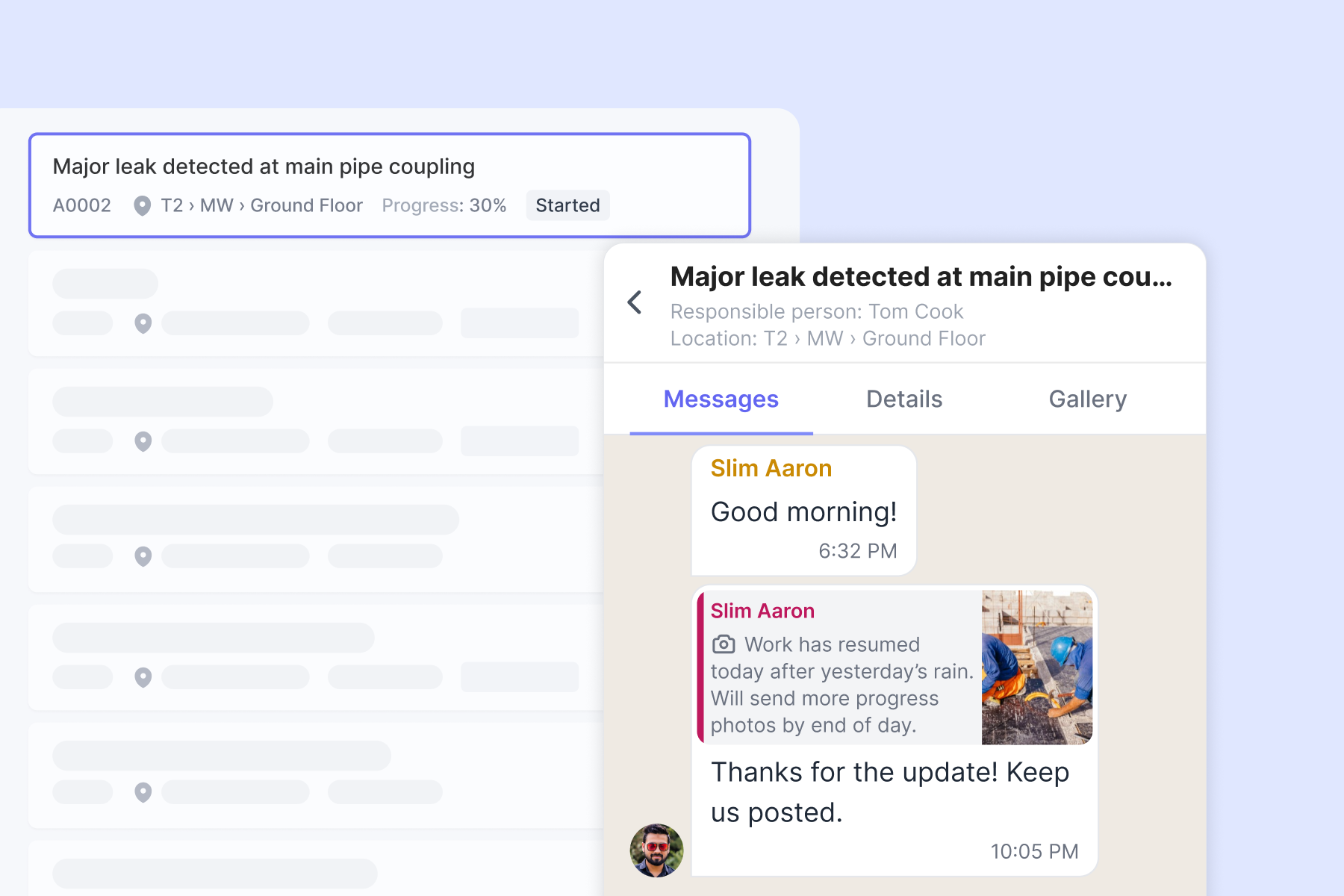
See the full history and status of every issue
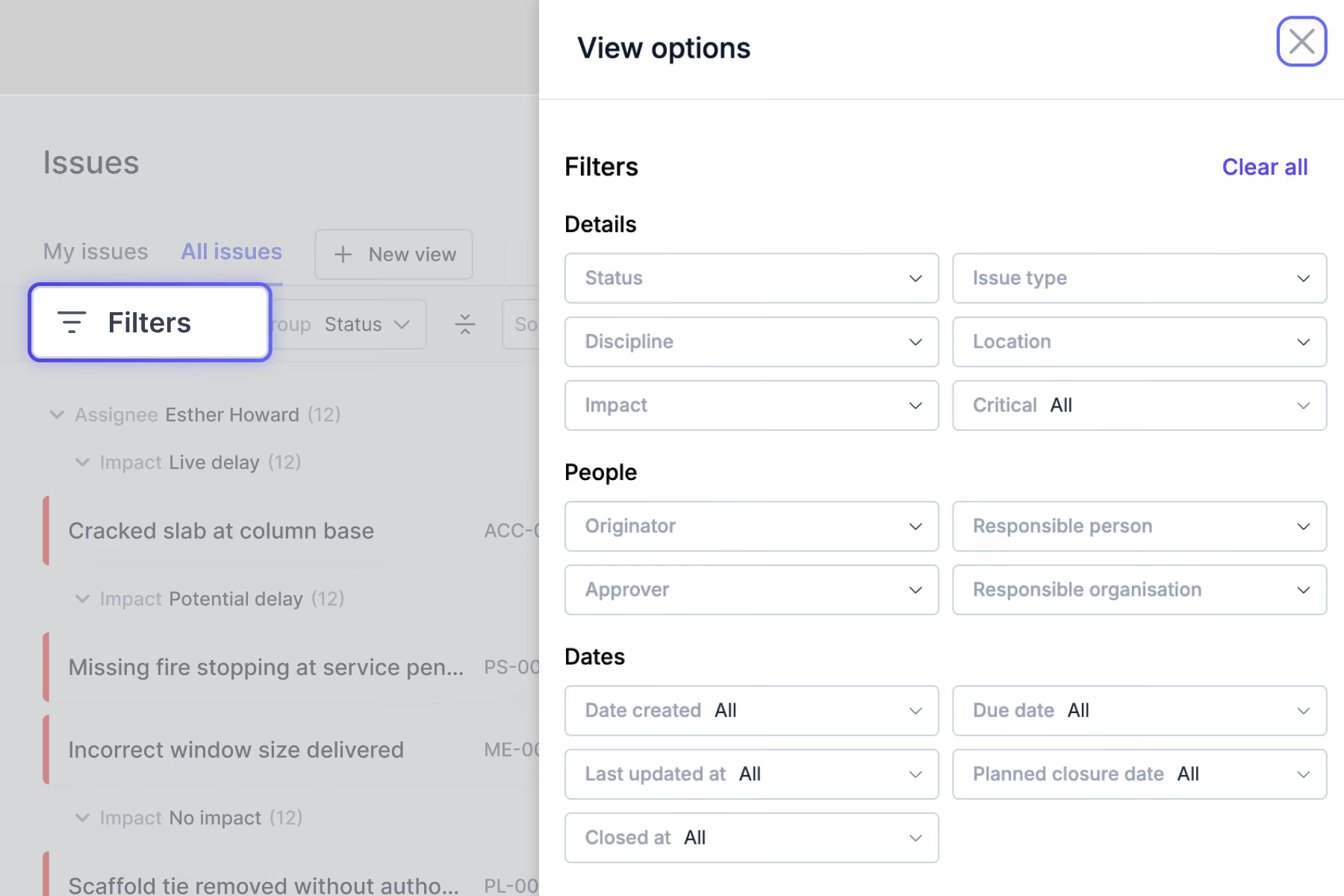
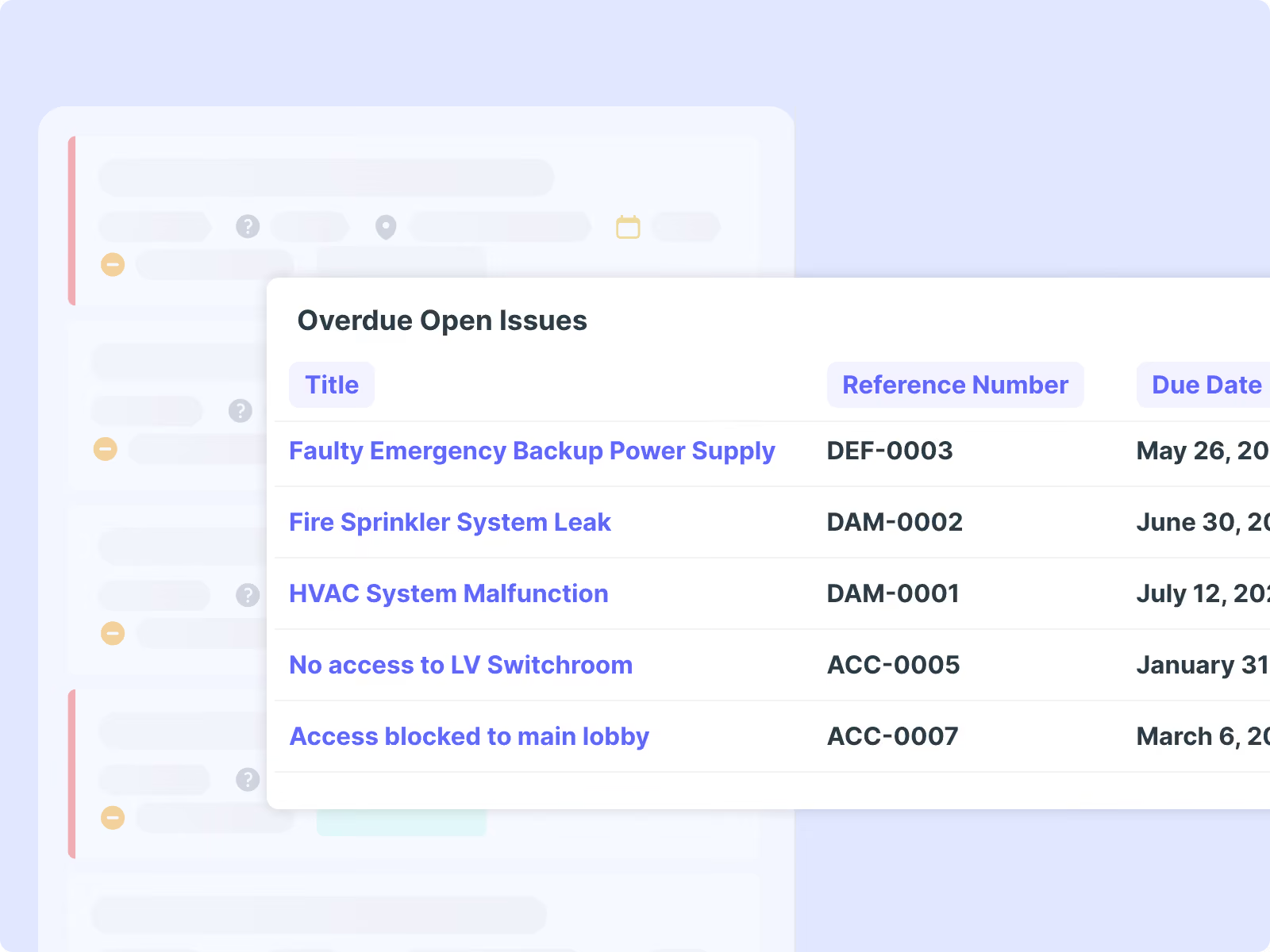
See what's open and overdue in one list
Filter by subcontractor, status, due date, location, or impact. Your team goes into the weekly meeting knowing what's holding up work and who's holding it.

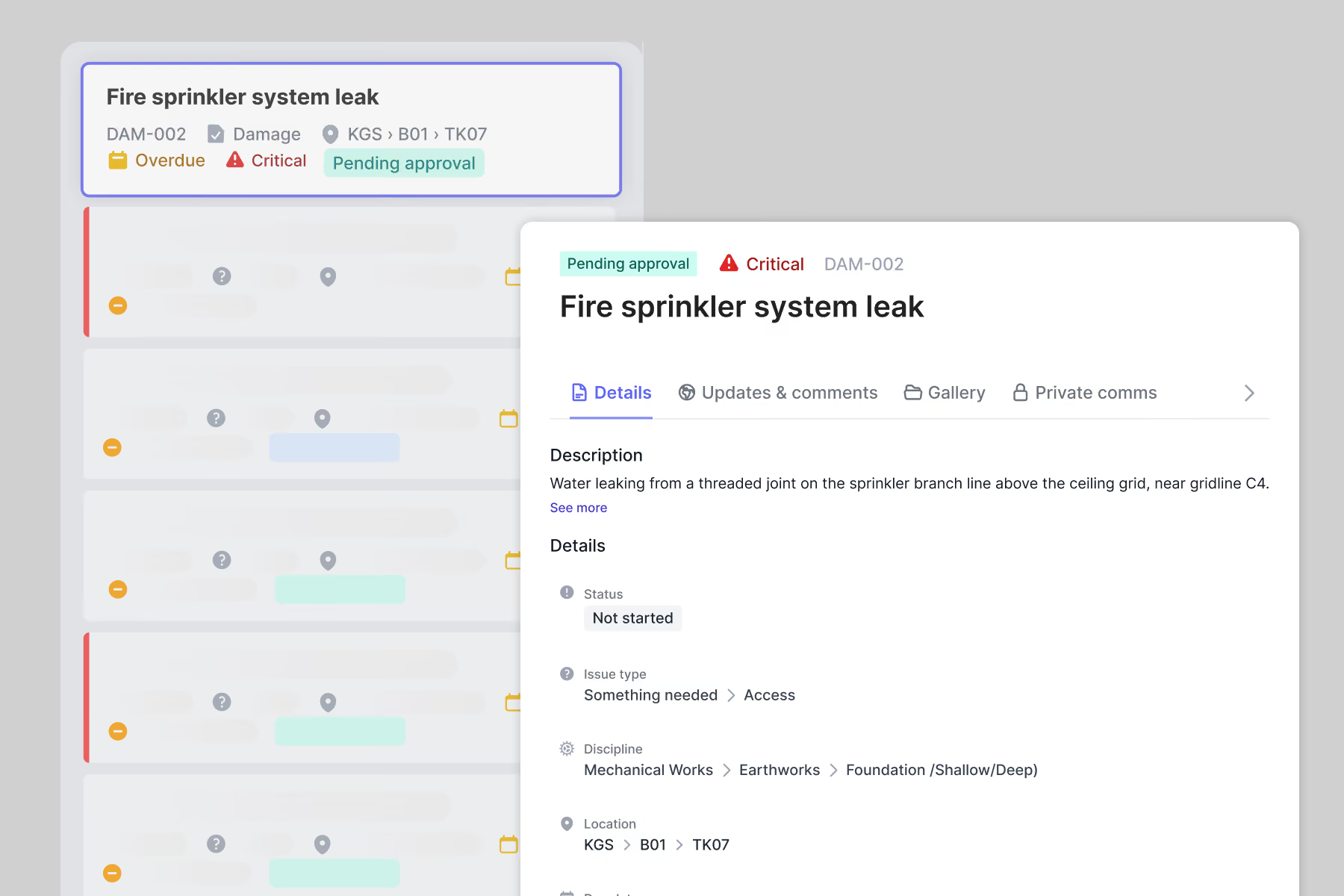
Open any issue and see everything on it
Every issue carries the responsible subcontractor, what's affected, the due date, and the discussion through to resolution. When a date moves, that's on the record too.

Stop subcontractor issues from stalling your project
See how leading contractors get issues closed out and keep subcontractors to what they agreed.

Dan van Wyk

Sunny Hundal

Andre Costa
More ways Shape helps with other critical project challenges
See how Shape works for you
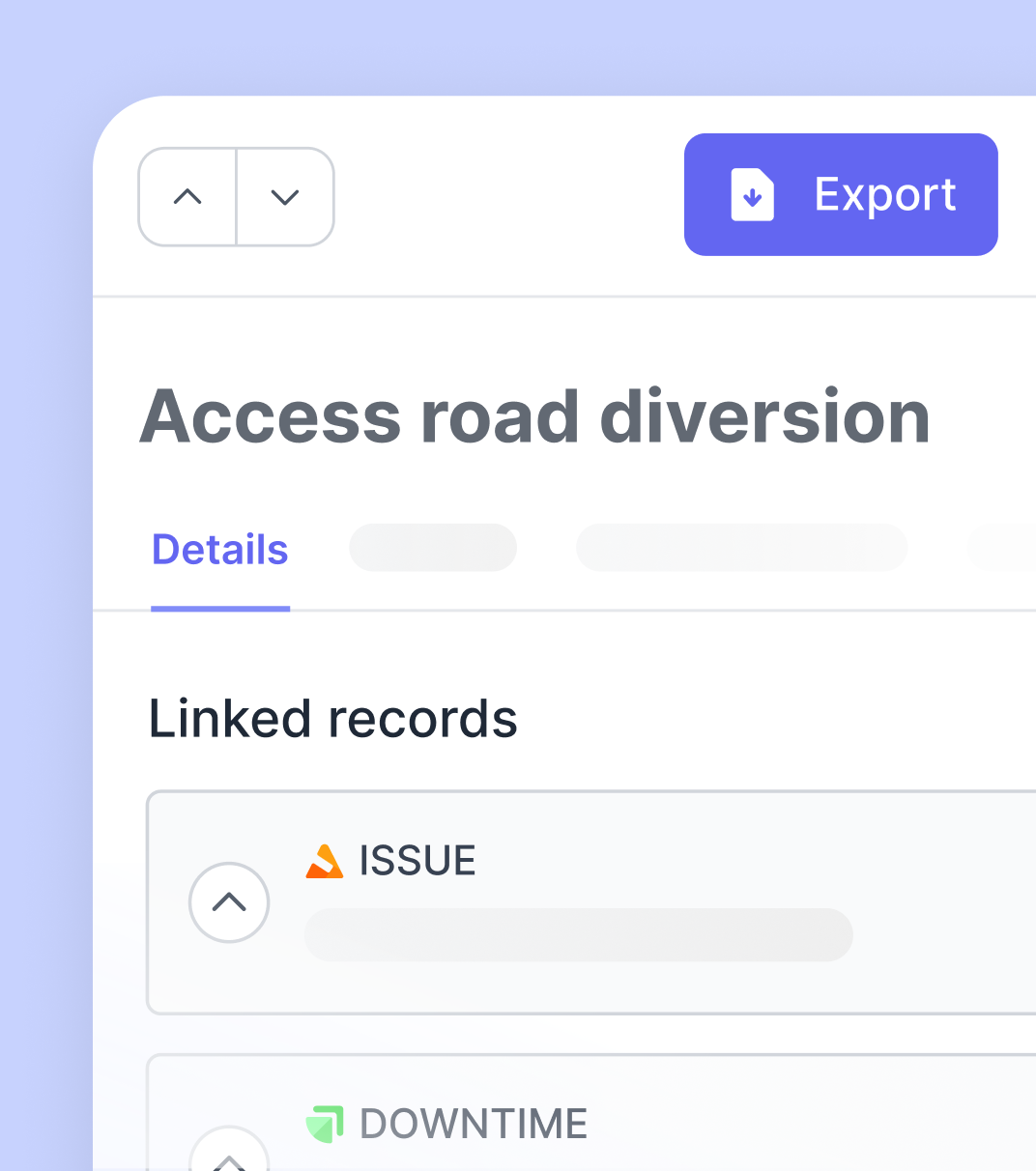
Capture defensible records and see change coming.
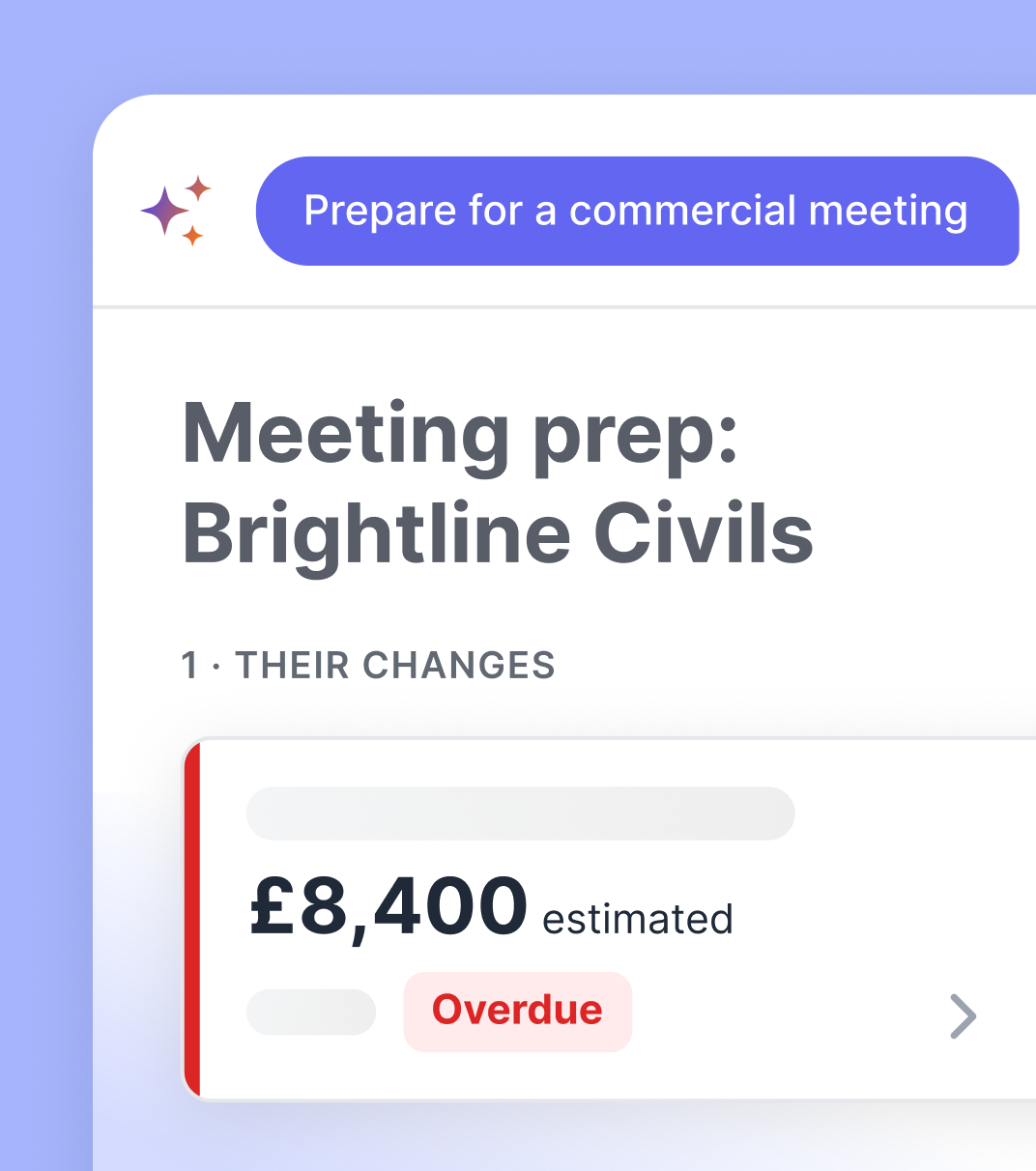
Protect margin with real-time change visibility and evidence that holds up.
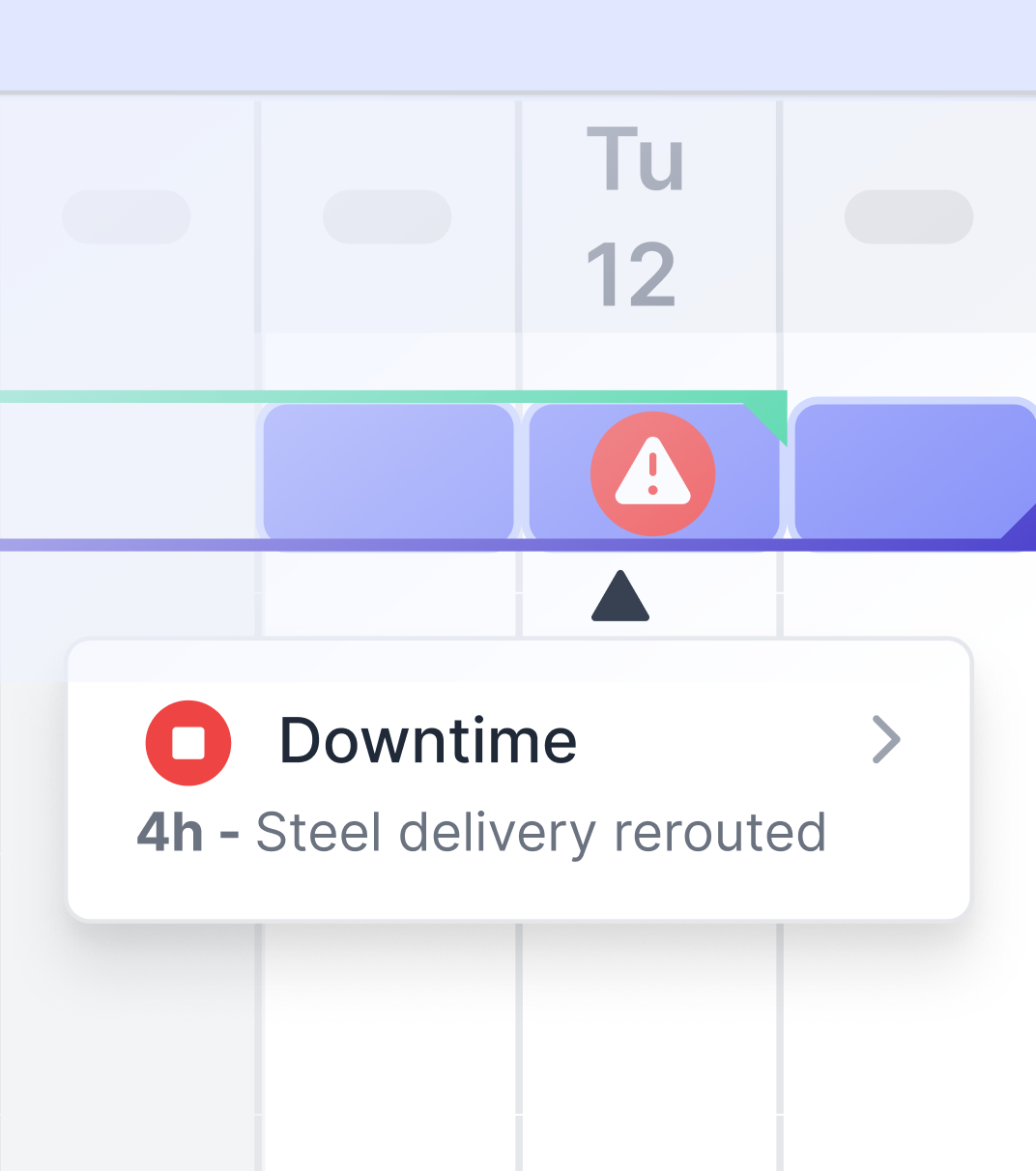
Track progress against schedule without manual work.
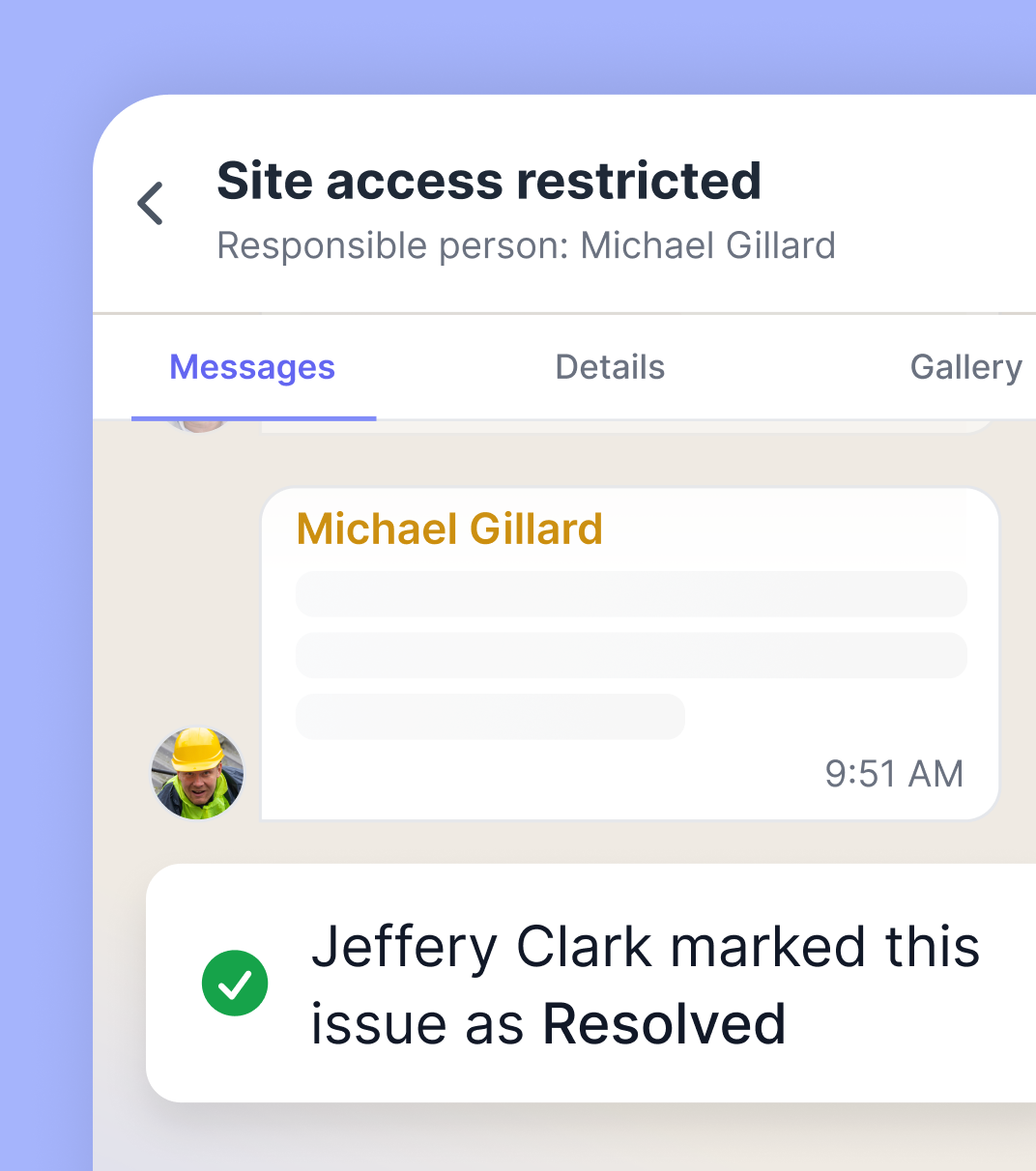
Keep site teams coordinated and issues resolved.
Frequently Asked Questions
