Free Excel Template — US & UK Contractors
Notice of Delay Template with Deadline Tracking
Log every delay event, track notice deadlines automatically, and issue contractually compliant notices before entitlement slips.
- Free Excel download
- Automatic deadline countdowns
- AIA · JCT · NEC4 guidance included
Oops! Something went wrong while submitting the form.
WHAT'S INSIDE
A complete delay notice workflow in one Excel file
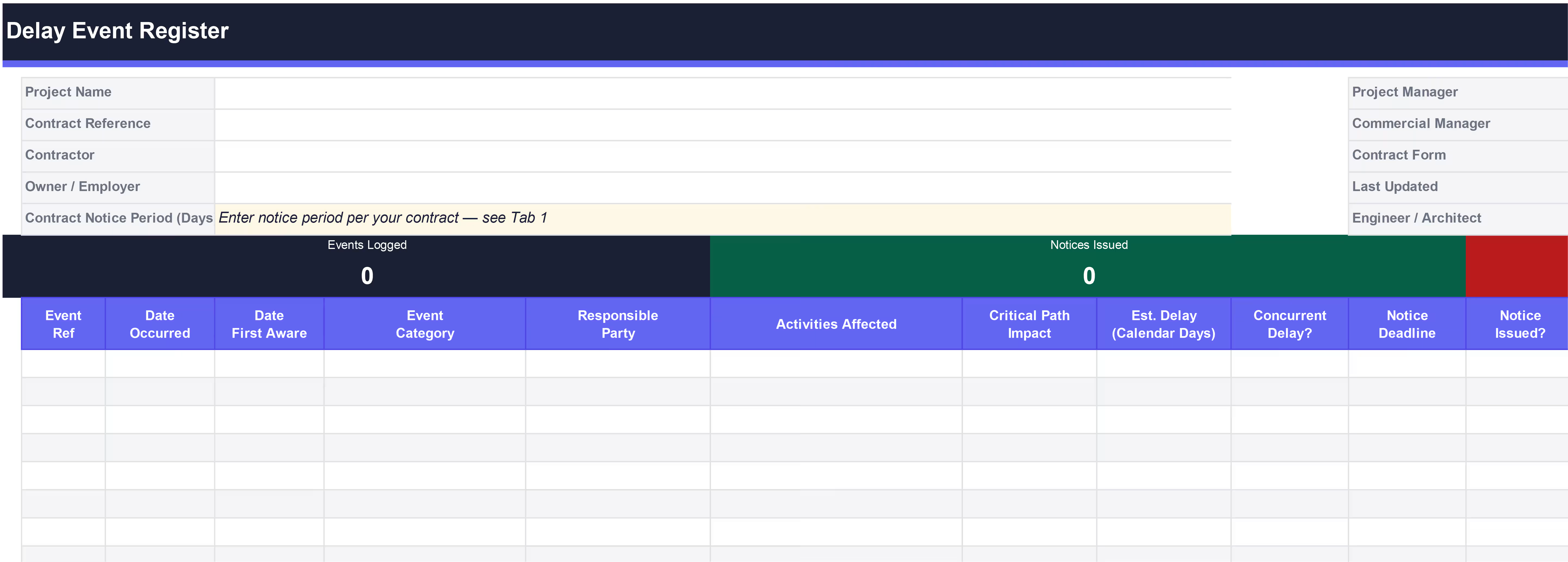
A delay notice template to fill in and issue, plus a delay event log to track every open event and deadline on the project.
- Issue notice in minutes, not hours
Fill in the event details, export to PDF, sign, and send. The form is ready to use and structured around what the contract actually requires. - Protect your right to claim costs, not just time
Reservation of rights language is built into the notice. A time-only notice can be challenged as having waived cost entitlement. This prevents that argument by default. - Send a notice that's harder to reject
Structured sections cover event description, affected activities, schedule impact, mitigation steps, and supporting documents. These are the elements that determine whether a notice holds up.
- Never miss a notice deadline again
Enter your contract notice period once. Every event gets a deadline calculated automatically and a live countdown showing days remaining. - See exactly where you're exposed
Red flags a missed deadline. Amber means five days or fewer remain. A summary at the top shows total events, notices issued, and overdue items in one view. - Build a record that holds up in a dispute
Each event captures what happened, when you first knew, critical path impact, whether notice was issued on time, and whether costs were reserved. - One log, no more chasing email threads
Site teams log events. The office tracks compliance. Everyone works from the same log with no gaps between what happened and what's on record.
- Contract-specific guidance for AIA, JCT, and NEC4
Notice requirements, when the clock starts, and what happens if you miss the deadline, covered for each contract form in plain language. - Step-by-step from first awareness to close
Five steps: set up the log, log the event, watch the deadline, issue the notice, track to close. Written for PMs who need to use this on a live project today. - The five most common notice failures, called out
Waiting too long, vague descriptions, wrong addressee, missing cost reservation. Flagged explicitly so you know what to watch for.
Notice of Delay Template with Deadline Tracking
Get the free templateWHO USES THIS
Built for the people responsible when entitlement is lost
If you're responsible for delivering the project or protecting the contract position, this log was built for your workflow.
- Project Manager
Know exactly which delay events are open, how many days you have left to issue notice, and what's already been protected. Walk into every owner meeting with a log that's current and defensible. - Project Executive
Stop finding out about missed notice windows after the fact. A consistent log format across projects means you can see notice compliance and open exposure before it becomes a dispute. - Contracts Manager
Get a delay record that's already structured the way a claim needs it. Notice issued, costs reserved, critical path impact, and concurrent delay all captured at the point of event. - Quantity Surveyor
See clearly which events have been noticed and which haven't, and whether costs have been reserved. Use that record to build the EOT claim rather than reconstruct the history from email chains.
Frequently Asked Questions
What is a Notice of Delay in construction?

What is the notice period for delay under AIA A201?
How does NEC4's notice system work? What's the difference between an EWN and a CEN?
What is the difference between a Notice of Delay and an Extension of Time claim?
What should a Notice of Delay include?
Does this template work for subcontractors as well as main contractors?